
Home → Blog → When Should You Call a Professional for Mold in Texas?
When Should You Call a Professional for Mold in Texas?
Texas Mold Remediation Team · August 25, 2026
Written for Texas homeowners. Licensing claims should be checked against current TDLR mold rules and the statutes they reference. This is general information, not a substitute for professional advice.
Call a professional when visible mold covers more than about 10 square feet, when it follows flooding or a hidden leak, when it's inside HVAC ducts or wall cavities, or when anyone in the home has asthma, allergies, or a weakened immune system. In Texas, jobs involving 25 contiguous square feet or more generally require a state-licensed mold assessor and remediator by law if you hire an outside company. Below is a breakdown of the size, health, and legal thresholds that should push you from a bottle of bleach to a licensed contractor.
How much mold is too much to clean up yourself?
The EPA's rule of thumb is that mold-affected areas smaller than about 10 square feet — roughly a 3-by-3-foot patch — can often be cleaned by a homeowner using proper protective equipment and ventilation. Anything larger than that is generally recommended for professional remediation, mainly because scrubbing or disturbing a large colony releases spores into the air that can spread contamination to unaffected rooms. See the EPA's mold guidance for the full breakdown of safe cleanup practices.
Texas law adds its own bright line. Under Texas Occupations Code Chapter 1958 and the rules administered by the Texas Department of Licensing and Regulation (TDLR), mold jobs covering 25 contiguous square feet or more typically must involve a licensed mold assessment consultant and a separately licensed mold remediation contractor when you hire outside help. Homeowners doing their own remediation on their own property are generally exempt from the licensing requirement, but once you bring in a company for a job at or above that threshold, both the assessor and the remediator need active TDLR licenses. Confirm current thresholds directly on TDLR's mold program page, since program rules can be updated.
What health symptoms mean you shouldn't wait?
According to the CDC, mold exposure can trigger allergic reactions, asthma flare-ups, coughing, wheezing, and eye or throat irritation. People with mold allergies, asthma, chronic lung disease, or compromised immune systems face higher risk and should avoid direct contact with visible mold — even in small patches. If anyone in the household is experiencing unexplained respiratory symptoms, sinus infections, or worsening asthma that improves when they leave the house, that's a signal to call a professional for both testing and remediation rather than attempting DIY cleanup, regardless of the affected square footage.
Does the cause of the mold matter?
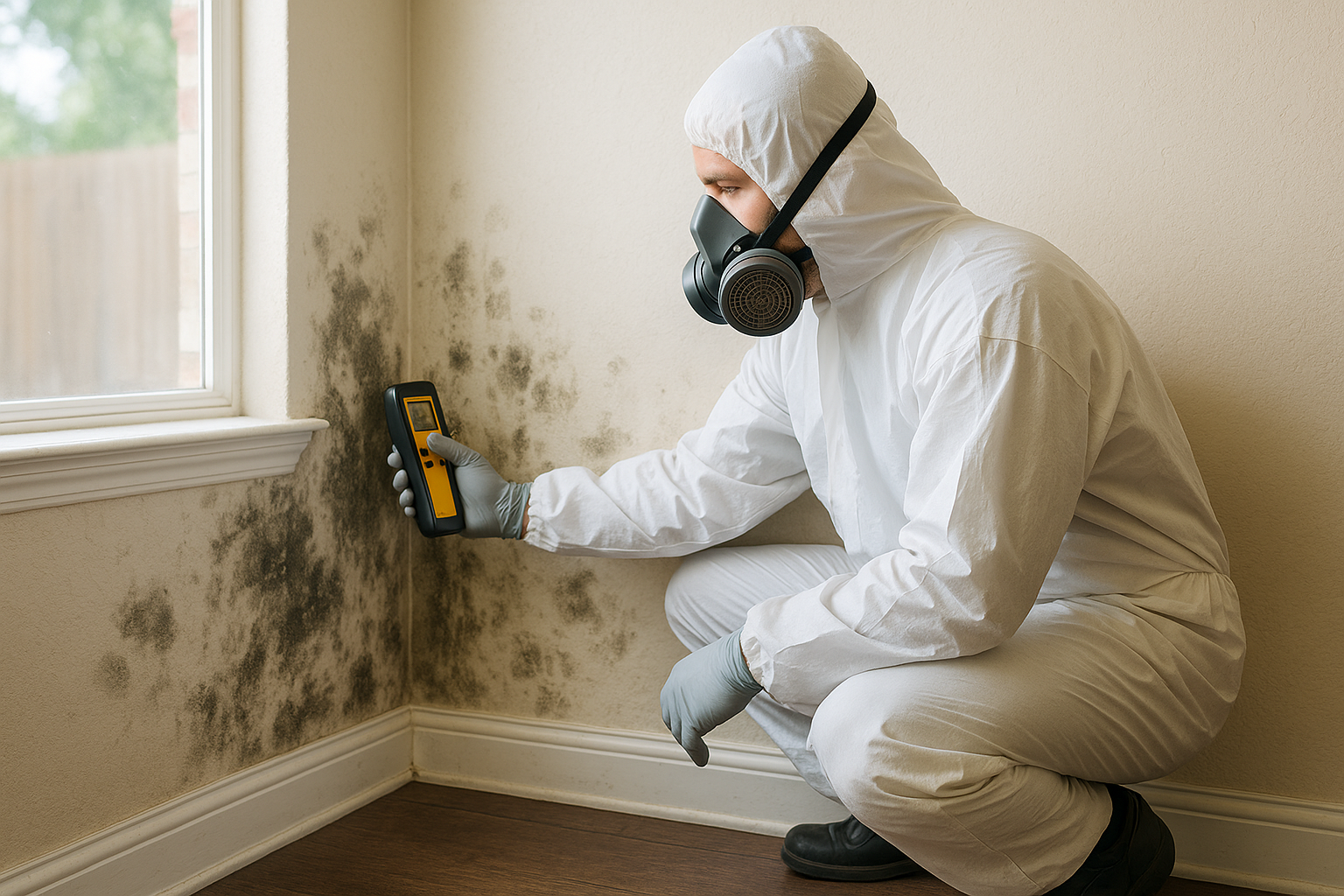
Yes. Mold caused by a hidden or ongoing moisture source — a slow plumbing leak, a roof leak, condensation inside walls, or a failed HVAC drain pan — tends to be more extensive than what's visible on the surface, and cleaning the surface without fixing the underlying moisture problem means the mold returns. Professionals use moisture meters and sometimes infrared cameras to find hidden damage behind drywall or under flooring. Mold following flooding or storm intrusion is almost always a call-a-professional situation, both because the contaminated area is usually large and because floodwater can carry bacteria and other contaminants alongside mold spores.
Texas's humid, storm-prone climate makes this especially relevant. Mold can begin growing within 24 to 48 hours of water intrusion, and Gulf Coast humidity accelerates growth compared to drier states. During hurricane season (June through November), homes hit by wind-driven rain or flooding often develop mold faster and more extensively than homeowners expect, which is why fast professional assessment after any significant water event matters — not just for health, but because flood-related mold typically isn't covered by standard insurance once it's allowed to spread.
What about mold in HVAC systems or inside walls?
Mold inside ductwork, air handlers, or wall cavities is a professional job almost by default. HVAC systems distribute air throughout the house, so mold growing inside ducts can spread spores to every room every time the system runs. Opening up walls to assess hidden mold also risks releasing spores broadly if it's not done with containment. If you smell a persistent musty odor but can't find visible mold, that's a strong reason to call a licensed mold assessor who can inspect wall cavities, subfloors, and HVAC components properly.
Is mold remediation legally required to use a licensed contractor in Texas?
For jobs at or above the 25-square-foot threshold, yes — when you're hiring an outside company. TDLR also generally requires that the company performing the mold assessment not be the same company performing the remediation on licensed-threshold jobs, to avoid a conflict of interest, with some exemptions for single-family owner-occupied homes and smaller jobs. After a licensed remediation job is complete, the contractor must issue a Certificate of Mold Damage Remediation to the property owner. Keep this certificate — Texas's Seller's Disclosure Notice under Property Code §5.008 asks whether the seller is aware of previous mold remediation, and having documentation makes future real estate transactions much smoother.
Before hiring anyone, verify their license status through TDLR's online license search. You can also start by browsing a directory of Texas mold remediation professionals or use the search tool to find a licensed contractor near you.
What does professional mold remediation cost in Texas?
Costs vary widely based on the size and location of the contamination:
- Mold inspection and testing: roughly $200–$700
- Typical residential remediation: commonly $500–$6,000
- Large or whole-house infestations, often after flooding: $10,000–$30,000 or more
- Per-square-foot remediation cost: often around $10–$25/sq ft, depending on severity and what materials are affected (drywall, insulation, subfloor, HVAC)
Whether your homeowners insurance covers any of this depends heavily on the cause. Texas homeowners policies typically cover mold only when it results from a sudden, covered peril like a burst pipe — not from long-term leaks, humidity, or deferred maintenance. Flood-related mold is generally excluded from standard homeowners policies, and many policies carry a mold damage sublimit even when the underlying cause is covered. Check your specific policy language, and see the Texas Department of Insurance for consumer guidance on what's typically covered.
What should renters do if they find mold?
Texas Property Code doesn't have a mold-specific statute, but general habitability duties under §92.052 can require a landlord to make repairs if mold results from a condition materially affecting health or safety that the landlord had notice of and failed to fix. Tenants should put repair requests in writing (email or certified mail creates a paper trail) and keep copies. If a landlord doesn't respond, a licensed mold assessor's report can help document the extent of the problem for any later dispute.
Quick decision checklist
Call a licensed mold professional if any of the following apply:
- Visible mold covers more than roughly 10 square feet
- The affected area is 25 square feet or more (Texas licensing threshold applies if hiring outside help)
- Mold followed flooding, a burst pipe, or a hidden/ongoing leak
- Mold is inside HVAC ductwork, wall cavities, or under flooring
- Anyone in the home has asthma, mold allergies, or a weakened immune system
- You smell persistent mustiness but can't locate the source
- You need documentation (a Certificate of Mold Damage Remediation) for an insurance claim or future home sale
This article is general information for Texas homeowners, not legal, medical, or insurance advice. Costs, rules, and coverage vary by property and change over time — verify details with a licensed professional and current TDLR guidance before acting.
Authoritative references used across this site: Sources: TDLR mold program · TDLR License Search · Texas Occupations Code Ch. 1958 · EPA mold guide · CDC mold & health
Find a Licensed Mold Contractor in Your Area
Search by city to find TDLR-verified mold remediation contractors near you.
Search Your City →