
Home → Blog → What Does Black Mold Look Like? A Texas Homeowner's Guide
What Does Black Mold Look Like? A Texas Homeowner's Guide
Texas Mold Remediation Team · September 9, 2026
Written for Texas homeowners. Licensing claims should be checked against current TDLR mold rules and the statutes they reference. This is general information, not a substitute for professional advice.
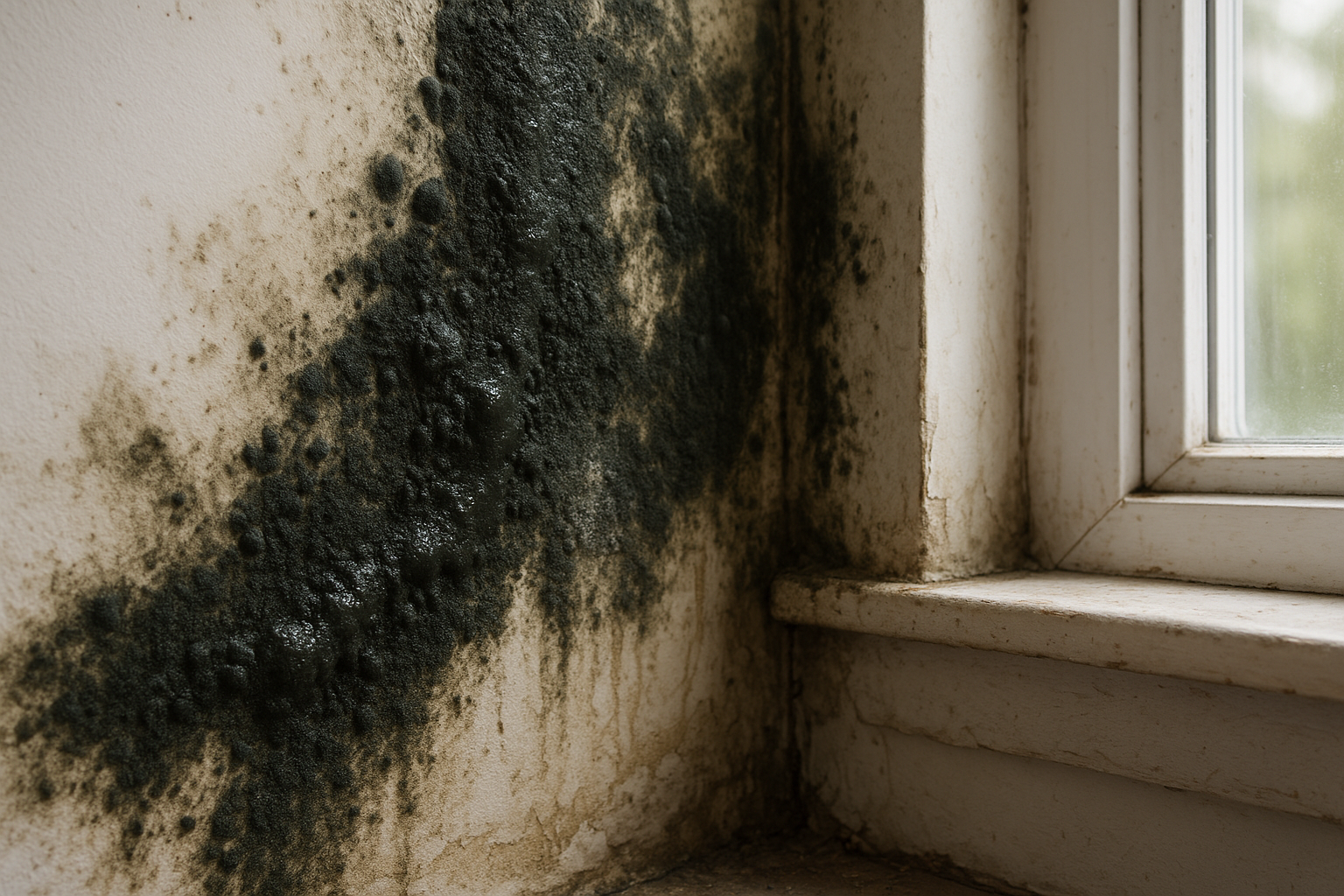
Toxic black mold (Stachybotrys chartarum) typically looks dark greenish-black and slimy or wet when actively growing, often turning gray, chalky, or powdery as it dries out. But color is not a reliable way to identify it — several common household molds look black, dark green, or brown, and the only way to confirm the species is lab testing of a sample. If you see suspicious dark patches on drywall, in a bathroom, or near a water leak, treat it as mold that needs to be addressed regardless of what species it turns out to be.
What color and texture does black mold actually have?
Stachybotrys chartarum, the mold most people mean when they say "toxic black mold," usually appears dark greenish-black with a slimy, shiny, or wet texture when there's active moisture feeding it. As the moisture source dries up, the same colony can turn gray or take on a dusty, powdery appearance. This texture shift confuses a lot of homeowners because the same mold patch can look completely different within a few weeks depending on humidity.
Other molds commonly found in homes — including Cladosporium, Alternaria, and some Aspergillus species — can also present as black, dark green, brown, or nearly charcoal-colored growth. Some look fuzzy or velvety rather than slimy. Because visual appearance overlaps so much between species, neither the EPA nor the CDC recommends trying to identify mold by sight alone. Both agencies advise treating all indoor mold growth as a problem that needs to be removed, regardless of color (EPA mold guide, CDC mold and health).
Where does black mold typically grow in Texas homes?
Texas's humidity, frequent storms, and heavy air-conditioning use create ideal conditions for mold in specific spots. Common trouble areas include:
- Bathroom grout, caulk, and ceiling corners near showers
- AC condensation lines and drip pans, especially in attics
- Attic decking and insulation after roof leaks
- Drywall and baseboards near past flooding or plumbing leaks
- Window sills and frames where condensation collects
- Inside HVAC ductwork, particularly in homes with older systems
A musty odor is often the first sign of a problem, even before any visible growth shows up — mold frequently develops behind walls, under flooring, or inside ductwork where it isn't immediately visible.
Can you tell mold species just by looking at it?
No. Color, texture, and growth pattern can offer clues, but they are not diagnostic. Two mold colonies that look identical to the naked eye can be entirely different species with different toxin profiles. If you need a definitive answer — for example, before a real estate transaction or a health-related concern — a licensed mold assessment professional can collect samples for laboratory analysis rather than relying on a visual inspection alone.
What health symptoms are linked to mold exposure?
According to the CDC, people exposed to mold commonly report nasal and sinus congestion, coughing, throat irritation, eye irritation, and skin irritation. People with asthma, existing mold allergies, or weakened immune systems may experience more severe reactions (CDC mold and health). Because health guidance treats all mold species similarly in terms of risk, homeowners don't need to wait for lab confirmation that mold is "the toxic kind" before taking action — any visible mold growth or persistent musty odor warrants investigation and remediation.
Who is licensed to test and remove mold in Texas?
Texas regulates mold work through the Texas Mold Assessment and Remediation Rules, administered by the Texas Department of Licensing and Regulation (TDLR) under Texas Occupations Code Chapter 1958 (TDLR mold program, Texas Occupations Code Chapter 1958). Licensed roles generally include Mold Assessment Consultants, Mold Assessment Technicians, Mold Remediation Contractors, and Mold Remediation Workers.
A key consumer protection built into the rules is separation of duties: the company that assesses a mold problem generally cannot also perform the remediation on the same job, which helps prevent a conflict of interest where a contractor might exaggerate a problem to sell more remediation work. There has historically been an exception for very small jobs — remediation of less than roughly 25 contiguous square feet of mold-contaminated material — but thresholds and exemptions can be updated, so it's worth confirming current rules directly on the TDLR mold program page before assuming a specific job qualifies.
For larger remediation projects, a licensed Mold Assessment Consultant typically develops a remediation protocol before work begins and issues a Certificate of Mold Damage Remediation once the job is verified complete. Homeowners doing DIY work on their own primary residence are generally exempt from needing a license themselves, but hiring an unlicensed "contractor" for a larger job can create legal and insurance headaches down the line. You can search for a licensed mold professional through our contractor search tool or browse the full Texas mold remediation directory.
What does Texas law require sellers and landlords to disclose?
Texas's standard Seller's Disclosure Notice, required under Texas Property Code §5.008, includes a specific question asking sellers to disclose any previous mold contamination or mold remediation on the property. Failing to disclose known mold history can expose a seller to legal liability after closing.
For rental properties, Texas doesn't have a mold-specific landlord statute as detailed as some other states, but general habitability and repair obligations under Texas Property Code Chapter 92 can apply if mold results from a landlord's failure to fix an underlying issue, such as a persistent leak, that affects a tenant's health or safety. Tenants dealing with mold tied to an unrepaired condition should document the problem in writing and follow the notice procedures outlined in Chapter 92.
How much does mold remediation cost in Texas?
Costs vary widely based on the size of the affected area, whether HVAC or structural components are involved, and how long moisture has been present. As a general guide:
- Small, isolated jobs (a bathroom corner or small closet): roughly $500–$1,500
- Moderate whole-room jobs: roughly $2,000–$6,000
- Large-scale contamination involving attics, crawlspaces, or whole-house HVAC systems: $10,000–$30,000 or more
These are general industry ranges, not fixed quotes — get a written estimate from a licensed assessor or remediation contractor before committing to a project. Texas's frequent flooding and hurricane activity, especially along the Gulf Coast and in the Houston metro area, can affect local demand and pricing.
Does homeowners insurance cover black mold damage in Texas?
Standard homeowners insurance in Texas generally does not cover mold damage unless it results from a sudden, covered peril, such as a burst pipe, rather than long-term neglect or humidity. Many policies also cap mold-remediation payouts with specific sub-limits that can be much lower than the cost of a full remediation job. Because policy language and coverage limits vary by insurer and change over time, check your specific policy and consult the Texas Department of Insurance for current consumer guidance (Texas Department of Insurance) before assuming a claim will be covered.
What should you do if you find suspected black mold?
Don't wait to identify the exact species before acting. Fix the underlying moisture source first — mold will keep coming back if a leak, condensation issue, or humidity problem isn't resolved, which is consistent with EPA remediation guidance. For anything beyond a small, contained patch, or if you're unsure how far the growth extends behind walls or flooring, bring in a licensed Texas mold assessment or remediation professional rather than relying on DIY cleaning products alone. You can find licensed professionals near you using our mold contractor search or explore the complete Texas mold remediation directory for licensed assessors and remediation companies statewide.
This article is general information for Texas homeowners, not legal, medical, or insurance advice. Costs, rules, and coverage vary by property and change over time — verify details with a licensed professional and current TDLR guidance before acting.
Authoritative references used across this site: Sources: TDLR mold program · TDLR License Search · Texas Occupations Code Ch. 1958 · EPA mold guide · CDC mold & health
Find a Licensed Mold Contractor in Your Area
Search by city to find TDLR-verified mold remediation contractors near you.
Search Your City →