
Home → Blog → What Are Tenant Rights Regarding Mold in Texas?
What Are Tenant Rights Regarding Mold in Texas?
Texas Mold Remediation Team · October 9, 2026
Written for Texas homeowners. Licensing claims should be checked against current TDLR mold rules and the statutes they reference. This is general information, not a substitute for professional advice.
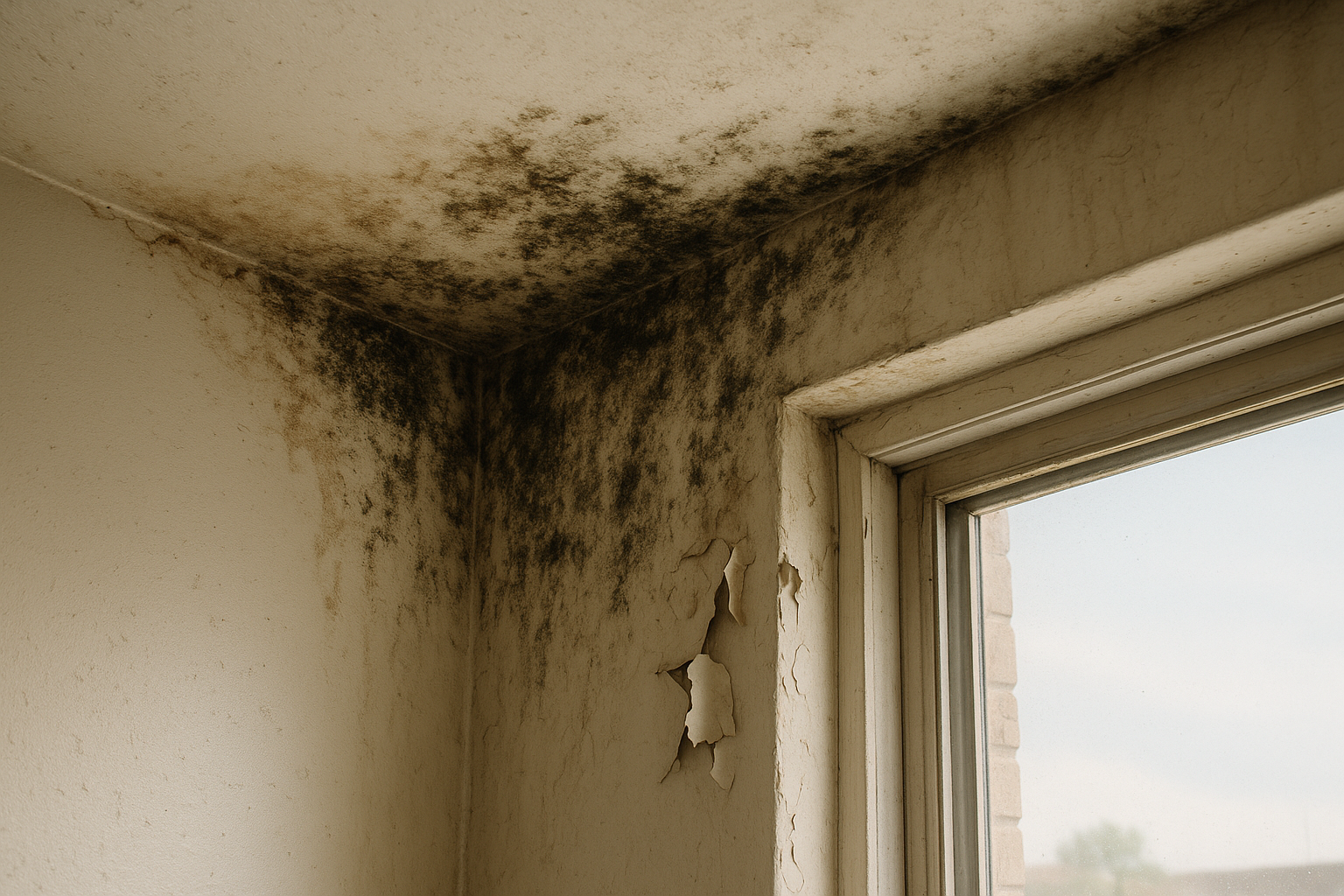
Texas tenants have the right to a habitable home free of conditions that materially affect their health or safety, including mold caused by unrepaired leaks or moisture problems. Under Texas Property Code Chapter 92, a landlord who receives proper written notice of a mold-causing condition must make a diligent effort to repair it. If the landlord fails to act, tenants may have the right to terminate the lease, sue for damages, or — under a stricter standard specific to mold — repair the problem themselves and deduct the cost from rent.
What does Texas law require landlords to do about mold?
Texas Property Code § 92.052 requires a landlord to make a diligent effort to repair a condition that "materially affects the physical health or safety of an ordinary tenant," as long as the tenant is current on rent and has given proper notice. Mold caused by a plumbing leak, roof failure, or HVAC condensation issue typically falls under this duty. This obligation exists alongside the common-law implied warranty of habitability, which separately requires landlords to keep rental housing livable.
The law does not set one universal repair deadline. According to TexasLawHelp.org, the timeline depends on how notice was sent and the nature of the problem; if the landlord is waiting on an insurance payout, they're allowed a reasonable amount of time after receiving those proceeds to complete repairs.
How do I properly notify my landlord about mold?
Notice matters enormously in Texas mold disputes. Under Property Code § 92.056, landlord liability is triggered only after the tenant gives notice "to the person to whom or to the place where the tenant's rent is normally paid," and the notice must be sent in a way that lets the tenant prove delivery — certified mail, a tracked carrier, or another trackable method. Verbal complaints or informal texts are riskier to rely on if a dispute later goes to court. Keep copies of everything, including photos of the mold and moisture source, dated correspondence, and any maintenance requests submitted through a property portal.
Can I withhold rent or pay for remediation myself and deduct the cost?
Texas allows a "repair-and-deduct" remedy, but mold has a tougher threshold than ordinary repairs. Under Property Code § 92.0561(d), a tenant can only use repair-and-deduct for a mold condition after the landlord has been notified in writing by a local housing, building, or health official that the condition materially affects the health or safety of an ordinary tenant — a tenant's own notice isn't sufficient to trigger this remedy for mold specifically. The repair also can't be performed by the tenant, the tenant's immediate family, the tenant's employer, or a business the tenant has an ownership stake in, and it must meet local code and permitting requirements. TexasLawHelp.org notes the deductible amount in any one month is capped at whichever is greater: one month's rent or $500 (for non-subsidized housing). Tenants should not simply stop paying rent without following this process, since unpaid rent can expose a tenant to eviction proceedings regardless of the mold issue.
What if my landlord refuses to fix a mold problem?
If a landlord ignores proper written notice, Texas tenants generally have three options, per TexasLawHelp.org: end the lease early and move out, file a lawsuit for damages (which can include the cost of repairs, reduced rent value, and in some cases other remedies allowed under the statute), or complete repairs through the stricter repair-and-deduct process described above. Because these remedies hinge on technical notice requirements, tenants facing a serious, unaddressed mold problem may benefit from consulting a tenant's rights legal aid organization before taking action.
Does my landlord have to hire a licensed mold professional?
In most cases, yes. Mold assessment and remediation work in Texas is regulated by the Texas Department of Licensing and Regulation (TDLR) under Occupations Code Chapter 1958. Companies and individuals performing this work generally must hold a TDLR mold license — such as Mold Assessment Technician, Mold Assessment Consultant, Mold Assessment Company, or Mold Remediation Worker Registration — unless a specific exemption applies (for example, certain general construction work or an owner working on their own property). Licensed assessors are also required to give the property owner a Certificate of Mold Remediation within 10 days of completing the work, and license holders must carry commercial general liability insurance. Tenants and landlords can verify any contractor's license status directly through the TDLR License Search before work begins, and should request the required Consumer Mold Information Sheet from any mold company they hire.
What changed with Senate Bill 1255 in 2025?
Effective September 1, 2025, SB 1255 repealed the prior exemption that allowed unlicensed employees to perform mold assessment or remediation work while supervised by a license holder. Previously, a licensed company could send unlicensed workers to a job site under supervision; now, every individual performing mold assessment or remediation generally must hold their own TDLR license or registration. As of mid-September 2025, TDLR indicated it was still reviewing the new law and had not yet issued updated administrative rules under 16 TAC Chapter 78, so some details may continue to evolve. Practically, this means Texas tenants and landlords should check the individual license of every technician on a job, not just the company's license, through the TDLR mold program page.
How much does mold remediation cost in Texas?
Costs vary widely based on square footage, mold type, and the extent of hidden moisture damage. Small, contained areas (25 square feet or less) commonly run $700–$6,000, medium-sized jobs (25–100 square feet) often cost $5,000–$15,000, and large-scale remediation (100+ square feet) can run $15,000–$30,000 or more, with whole-home jobs sometimes exceeding $40,000. Metro-level averages differ too: Austin projects average roughly $1,433–$6,000 (with a typical job near $3,509), while Houston averages around $2,025, with most homeowners paying $888–$3,298 and severe whole-home cases exceeding $20,000 — unsurprising given Houston's humid climate. Irving-area pricing typically falls in the $1,500–$6,000 range. Labor is usually the largest cost driver, making up roughly 60% of total expense, with specialist labor commonly billed at $75–$100 per hour.
Does renters or landlord insurance cover mold damage?
Coverage depends heavily on the cause of the mold and the specific policy. Standard renters and homeowners policies often exclude mold resulting from long-term neglect or unaddressed leaks, while mold caused by a sudden, covered event (like a burst pipe) may be covered. Texas Insurance Code Chapter 544 addresses certain mold-related insurance provisions, and the Texas Department of Insurance publishes consumer guidance on when water damage and mold claims are typically covered or denied. Tenants should review their renters insurance policy language directly and ask their landlord whether the building's policy covers the specific type of water intrusion involved.
What health risks does mold pose to tenants?
The CDC notes that mold exposure can cause allergic reactions, respiratory irritation, and other health effects, particularly for people with asthma, allergies, or compromised immune systems. The EPA's guide on mold, moisture, and your home explains that controlling indoor moisture is the most effective way to prevent mold growth in the first place, and that visible mold growth should be addressed regardless of the species present, since testing to identify mold type rarely changes the recommended cleanup approach. For large-scale remediation, professionals also follow EPA guidance on containment procedures to prevent spreading spores to unaffected areas of a home during cleanup.
How do I find a licensed mold remediation contractor in Texas?
Before hiring anyone, verify their license status through TDLR's License Search, confirm they'll provide the required Consumer Mold Information Sheet, and get a written scope of work and certificate of completion. Tenants who need a vetted professional can find a licensed mold remediation contractor near them or browse the full Texas mold remediation directory to compare licensed companies by city and service area.
This article is general information for Texas homeowners, not legal, medical, or insurance advice. Costs, rules, and coverage vary by property and change over time — verify details with a licensed professional and current TDLR guidance before acting.
Authoritative references used across this site: Sources: TDLR mold program · TDLR License Search · Texas Occupations Code Ch. 1958 · EPA mold guide · CDC mold & health
Find a Licensed Mold Contractor in Your Area
Search by city to find TDLR-verified mold remediation contractors near you.
Search Your City →