
Home → Blog → What Are the Signs of Hidden Mold in Your Home?
What Are the Signs of Hidden Mold in Your Home?
Texas Mold Remediation Team · October 7, 2026
Written for Texas homeowners. Licensing claims should be checked against current TDLR mold rules and the statutes they reference. This is general information, not a substitute for professional advice.
The clearest signs of hidden mold are a persistent musty smell, unexplained allergy or respiratory symptoms that improve when you leave the house, water stains or warped materials with no visible cause, and past water damage that was never fully dried out. Mold often grows inside walls, under flooring, or in HVAC systems where it isn't visible, so your nose and your health history are often better early-warning tools than your eyes. If mold growth covers 25 square feet or more, Texas law requires it to be handled by a TDLR-licensed mold professional.
What does hidden mold smell and feel like?
A musty, earthy, or "basement" odor is one of the most reliable indicators of mold growing somewhere you can't see — behind drywall, under cabinets, inside HVAC ductwork, or beneath carpet padding. Unlike visible surface mold, hidden mold often produces a smell before it produces any visual evidence. Homeowners frequently describe it as a smell that's stronger in one room, after rain, or when the air conditioning kicks on. If the odor persists after cleaning and ventilating, it's worth investigating further rather than masking it with air fresheners.
Can mold cause health symptoms before you ever see it?
Yes. According to the CDC, mold exposure is associated with nasal and sinus congestion, throat irritation, coughing or wheezing, eye irritation, and skin irritation. People with asthma, mold allergies, or weakened immune systems can have more severe reactions. If family members experience recurring respiratory symptoms, headaches, or allergy-like flare-ups that improve when they're away from home — at work, school, or on vacation — hidden mold is a reasonable thing to rule out. The EPA notes there's no established "safe" numeric level of indoor mold spores, so the practical approach is finding and fixing the moisture source rather than waiting for a lab number to confirm a problem.
What physical clues suggest mold is growing out of sight?
Beyond smell and symptoms, watch for:
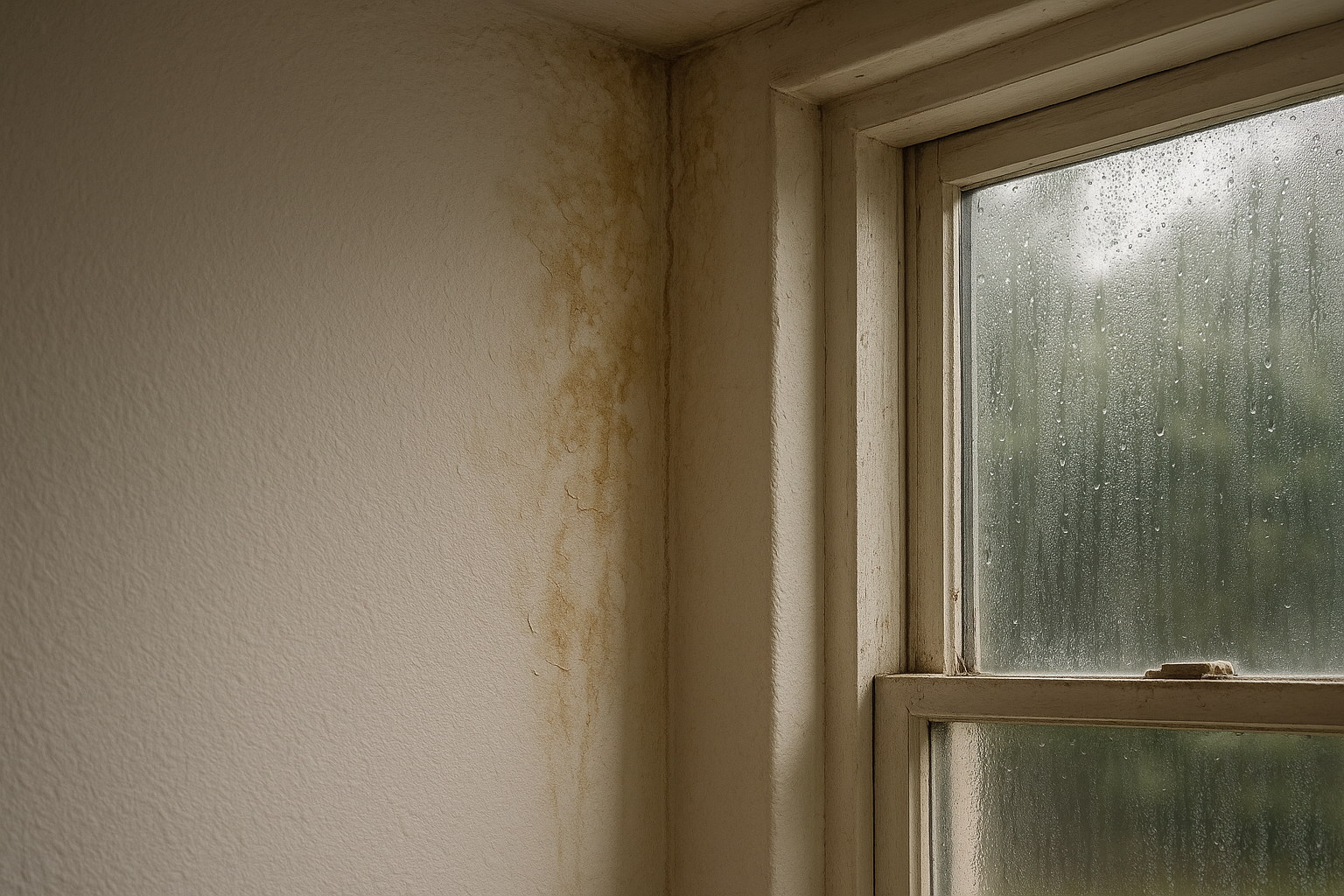
- Discoloration, bubbling, or peeling paint and wallpaper
- Warped, buckling, or soft-feeling drywall, baseboards, or flooring
- Condensation or water staining on windows, walls, or ceilings
- Rust stains or discoloration around HVAC vents or supply registers
- Indoor humidity that consistently reads above roughly 60% without an obvious explanation
- Any area with a history of unresolved leaks, flooding, or slow plumbing drips
Any one of these alone isn't proof of mold, but several together — especially combined with a musty smell or health symptoms — are a strong signal to get a professional inspection rather than guess.
Where does hidden mold typically grow in Texas homes?
Texas's humidity and flood exposure — particularly along the Gulf Coast, in the Houston metro, and in areas with a history of hurricane or flash-flood damage — make the state higher-risk for recurring or hidden mold than drier climates. Common hidden-mold locations include behind bathroom tile and under tubs, beneath carpet and padding near exterior walls, inside HVAC ductwork and around AC condensate lines, in crawlspaces and attics with poor ventilation, and behind drywall in rooms that previously flooded or had a slow, undetected leak. Any home with a history of water intrusion that wasn't dried out within 24–48 hours is a reasonable candidate for a closer look.
Why does the 25-square-foot threshold matter in Texas?
Under Texas Occupations Code Chapter 1958 and the implementing rules in 16 TAC Chapter 78, any mold remediation project where the reasonably expected contiguous mold growth area is 25 square feet or more must be performed by a state-licensed Mold Remediation Contractor or Worker, typically after assessment by a separately licensed Mold Assessment Consultant or Technician. For projects at or above that threshold, the company doing the assessment generally cannot be financially affiliated with the company doing the remediation — a built-in consumer protection so an inspector isn't financially incentivized to "find" a problem their sister company then gets paid to fix. Below 25 square feet, state licensing generally isn't required, which is a useful gauge of how serious a hidden-mold discovery might be. You can verify any mold professional's license status using TDLR's License Search tool, and general program details are available on the TDLR mold program page and its mold FAQ.
Does hidden mold affect selling a home in Texas?
Yes. The Texas Seller's Disclosure Notice, tied to Property Code §5.008 and the TREC-promulgated form, specifically asks whether the seller is aware of previous mold remediation involving more than 25 square feet of mold removed from the dwelling or an attached structure. This mirrors the same 25-square-foot threshold used for contractor licensing, meaning a past hidden-mold problem — if it crossed that threshold — isn't something a seller can simply leave out of disclosure. For this reason, homeowners should always request and keep the **Certificate of Mold Damage Remediation (CMDR)** that a licensed remediator must issue after completing and clearance-testing a job of that size. That document becomes important paperwork at resale, not just proof of completed work. Landlord-tenant mold disputes, by contrast, generally fall under the general repair-and-habitability rules in Property Code Chapter 92 rather than a mold-specific statute.
Will homeowners insurance cover hidden mold remediation?
Often only partially, and sometimes not at all. Standard Texas homeowners policies generally cover mold damage only when it results from a sudden, covered peril — such as a burst pipe — not from long-term leaks, ongoing humidity, neglect, or flooding. Many policies also carry a sub-limit specifically for mold remediation, often capped in the low thousands of dollars, unless the homeowner purchased a separate mold endorsement. Flood-caused mold is typically excluded from standard homeowner policies entirely and instead falls under NFIP flood insurance, which has its own requirements about prompt remediation to limit mold growth after a flood. Texas Insurance Code Chapter 544 addresses mold-related insurance provisions, and the Texas Department of Insurance publishes consumer guidance on when water damage and mold are and aren't covered — worth reading before you assume a claim will be paid. See also Insurance Code Chapter 544 for the statutory language.
What does it cost to inspect and remediate hidden mold in Texas?
Costs vary by scope and region, but general Texas ranges are:
- Visual mold inspection: roughly $300–$600; add air or surface sampling with lab analysis and it often runs $600–$900+
- Minor remediation (small bathroom or closet spot): roughly $500–$1,500
- Moderate remediation (HVAC contamination, crawlspace, multiple rooms): roughly $2,000–$6,000
- Major/structural remediation (whole-house or post-flood, with material replacement): $10,000–$30,000+
Costs tend to run higher after hurricanes or flash flooding, when demand spikes and more structural materials typically need replacement rather than cleaning.
What should you do if you suspect hidden mold?
Start by addressing visible moisture — fix leaks, improve ventilation, and run a dehumidifier if humidity stays above about 60%. For anything beyond a small, isolated spot, or if you're experiencing ongoing symptoms you can't explain, get a licensed mold assessment rather than relying on a DIY test kit, since the EPA's own guidance favors finding and fixing the moisture source over routine air sampling. You can confirm a contractor's license status through TDLR's License Search, review current consumer protections in TDLR's 2025 consumer guide, and use our contractor search tool or browse the full Texas mold remediation directory to find a licensed assessor or remediator near you.
This article is general information for Texas homeowners, not legal, medical, or insurance advice. Costs, rules, and coverage vary by property and change over time — verify details with a licensed professional and current TDLR guidance before acting.
Authoritative references used across this site: Sources: TDLR mold program · TDLR License Search · Texas Occupations Code Ch. 1958 · EPA mold guide · CDC mold & health
Find a Licensed Mold Contractor in Your Area
Search by city to find TDLR-verified mold remediation contractors near you.
Search Your City →