
Home → Blog → Is It Safe to Stay in a House with Black Mold?
Is It Safe to Stay in a House with Black Mold?
Texas Mold Remediation Team · October 15, 2026
Written for Texas homeowners. Licensing claims should be checked against current TDLR mold rules and the statutes they reference. This is general information, not a substitute for professional advice.
In most cases, you can stay in a house with a small area of black mold while it's being remediated, but you shouldn't live with it indefinitely. The real question isn't the mold's color — it's the size of the affected area, where it's growing, and whether anyone in the household is especially vulnerable to respiratory or immune issues. Both the EPA and CDC treat all visible indoor mold as something that should be cleaned up and addressed promptly, regardless of species.
Does mold color actually indicate how dangerous it is?
No. "Black mold" is a common nickname for Stachybotrys chartarum, but plenty of common household molds are also dark or black in appearance, and color alone doesn't tell you how hazardous a particular growth is. The EPA's guide to mold, moisture, and your home states that testing to identify mold species generally isn't necessary — if you can see mold or smell a musty odor, it should be treated as a problem and remediated. The CDC's mold and health guidance echoes this: species identification isn't typically needed to decide on a health response. What matters more is fixing the moisture source that's feeding the growth, since mold won't come back once the home is dry.
What symptoms should make me leave the house sooner rather than later?
According to CDC guidance, mold exposure commonly causes nasal and sinus congestion, throat irritation, coughing, wheezing, eye irritation, and skin irritation. People with mold allergies, asthma, or weakened immune systems can have more severe reactions, including serious respiratory distress. If anyone in the household — especially children, elderly residents, or those with existing lung or immune conditions — starts developing persistent symptoms that improve when they're away from the house, that's a signal to arrange alternative housing while remediation happens, rather than waiting it out.
How much mold is too much to just live around?
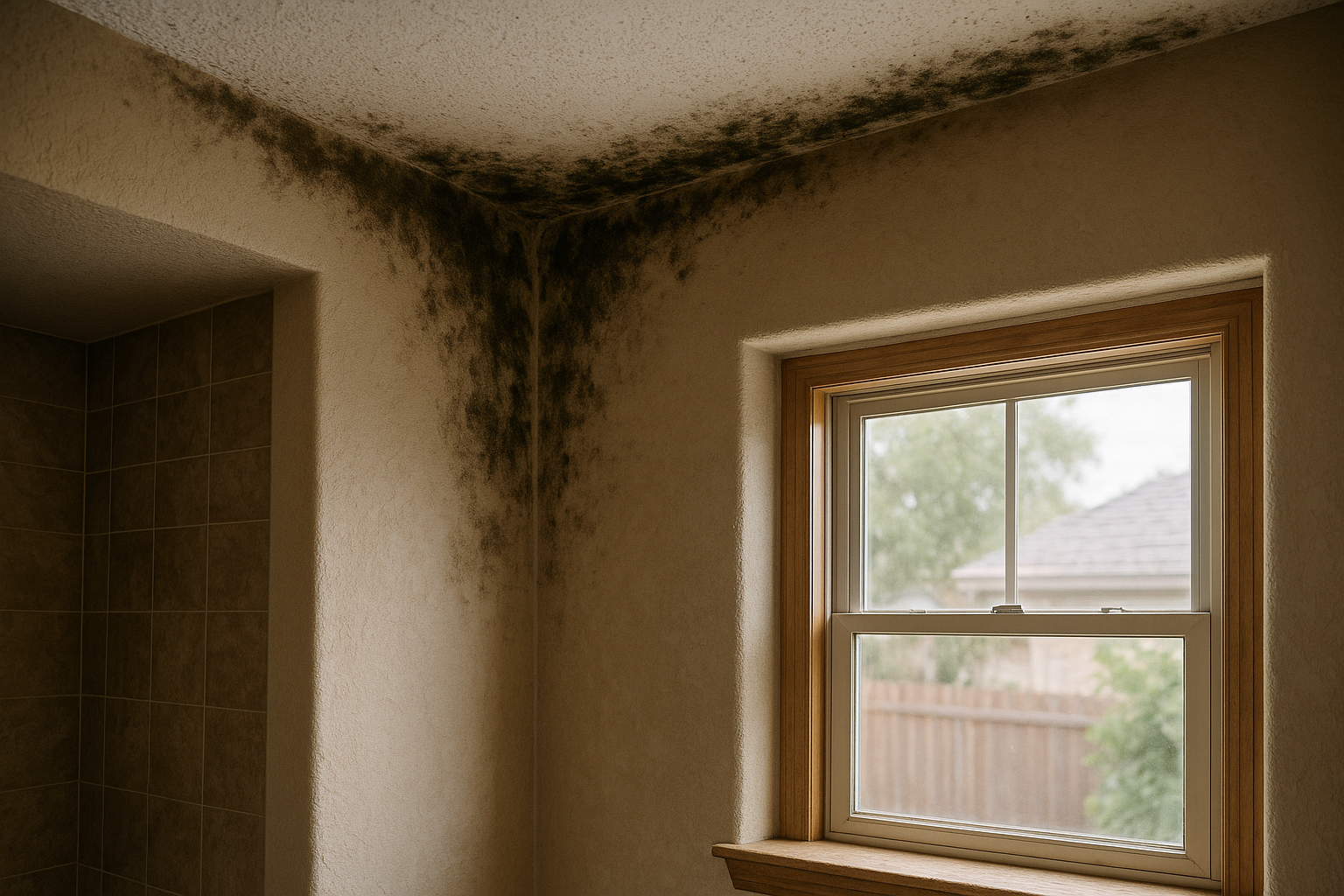
Texas's mold rules give a useful benchmark here, even though they're written for contractor licensing rather than homeowner health decisions. Under the TDLR mold FAQ, there's a commonly cited small-scope exemption — generally around 25 contiguous square feet or less — below which a licensed mold assessor or remediator isn't legally required. That threshold is a reasonable rough guide for homeowners too: a small, isolated spot (say, a patch in a bathroom corner) is a very different situation from mold spreading across multiple rooms, inside HVAC ductwork, or behind walls after a flood. Larger, recurring, or HVAC-related mold warrants a licensed assessment, not DIY judgment calls.
Does it matter where in the house the mold is growing?
Yes, significantly. Mold inside an HVAC system is higher-risk than a small bathroom spot because the air handler actively distributes spores throughout the home every time it runs, exposing every occupied room rather than staying contained to one area. Mold growing inside wall cavities or under flooring after water intrusion is also more concerning than surface mold, because it's often more extensive than what's visible and can indicate a larger moisture problem than it first appears. If you notice a musty smell but can't locate visible mold, that's a reason to bring in a licensed mold assessment consultant rather than assume it's not serious.
Do I need a licensed professional, or can I handle it myself?
Texas regulates mold work under the Texas Occupations Code Chapter 1958, with rules administered by the Texas Department of Licensing and Regulation (TDLR). TDLR licenses four categories of mold professionals: Mold Assessment Consultants, Mold Assessment Technicians, Mold Remediation Contractors, and Mold Remediation Workers. One consumer-protection detail worth knowing: the company that assesses your mold generally cannot be the same company that remediates it on the same job, which helps prevent a conflict of interest where an assessor has a financial incentive to recommend expensive remediation. You can verify any contractor's license status through TDLR's License Search tool before hiring anyone, and TDLR's consumer protection guide outlines what to expect from a legitimate mold job. For small areas under the exemption threshold, careful DIY cleanup with proper protective equipment may be reasonable. For anything larger, recurring, or involving structural materials, hire a licensed assessor first and a separate licensed remediation contractor second. You can start by browsing the Texas mold remediation directory or use the contractor search tool to find a licensed professional near you.
What does mold remediation typically cost in Texas?
Costs vary widely depending on the extent of contamination and whether structural materials need replacement. Commonly reported industry ranges include:
- Mold inspection/assessment: roughly $300–$650, more for larger homes or lab testing
- Small, localized remediation: roughly $500–$3,000
- Whole-house or severe infestations (post-flood, HVAC contamination, structural mold): $10,000–$30,000 or more
- Per-square-foot estimates: often cited around $10–$25/sq ft, depending on severity and accessibility
These are general industry figures, not a single authoritative statewide dataset, so get a few written quotes from licensed contractors before committing. A verified license via TDLR's search tool is a good first filter when comparing bids.
Will my homeowners insurance cover mold removal?
It depends on the cause. Texas homeowners insurance, which falls under rules in the Texas Insurance Code Chapter 544, typically covers mold damage only when it results from a sudden, covered peril — like a pipe that bursts unexpectedly — not from long-term neglect, chronic humidity, or gradual leaks you didn't address. Flood-caused mold generally isn't covered by a standard homeowners policy at all; that falls under separate flood insurance (NFIP or private flood coverage). The Texas Department of Insurance's guidance on water damage and mold coverage is worth reviewing before you assume a claim will be paid, and before you delay remediation while waiting on an insurance decision — mold damage often worsens the longer it's left untreated, regardless of coverage status.
Am I required to disclose mold if I sell my house later?
Texas doesn't have a mold-specific disclosure law. Instead, mold-related issues are folded into the general Seller's Disclosure Notice required under Texas Property Code §5.008, which asks sellers to disclose known defects, including prior flooding, water penetration, or active mold. If you're a tenant rather than an owner, there's no mold-specific statute either — mold complaints generally fall under the landlord's general repair duty in Property Code Chapter 92, which requires landlords to address conditions materially affecting health or safety within a reasonable time after written notice.
How fast does mold grow after a flood or leak in Texas?
Texas's humid climate, combined with seasonal hurricanes and spring storms, makes post-flood mold growth a fast-moving risk. Homes flooded during tropical storms or heavy rain are especially prone to visible mold growth within 24–48 hours if materials aren't dried out quickly. If your home has recently flooded or had a significant leak, don't wait for visible mold to appear before taking action — get air movers and dehumidifiers running immediately, and schedule an assessment promptly if drying isn't complete within a day or two.
So, is it safe to stay — bottom line?
For a healthy household dealing with a small, contained patch of mold that's actively being remediated, staying in the home is generally considered low-risk by EPA and CDC standards. But mold covering a large area, growing inside HVAC systems, or affecting anyone with asthma, allergies, or a compromised immune system changes that calculus — those situations call for prompt professional assessment and, in some cases, temporary relocation during remediation. When in doubt, verify a contractor's license through TDLR and get an assessment before deciding whether your household needs to stay or go.
This article is general information for Texas homeowners, not legal, medical, or insurance advice. Costs, rules, and coverage vary by property and change over time — verify details with a licensed professional and current TDLR guidance before acting.
Authoritative references used across this site: Sources: TDLR mold program · TDLR License Search · Texas Occupations Code Ch. 1958 · EPA mold guide · CDC mold & health
Find a Licensed Mold Contractor in Your Area
Search by city to find TDLR-verified mold remediation contractors near you.
Search Your City →