
Home → Blog → How Much Does Mold Testing Cost in Texas?
How Much Does Mold Testing Cost in Texas?
Texas Mold Remediation Team · October 13, 2026
Written for Texas homeowners. Licensing claims should be checked against current TDLR mold rules and the statutes they reference. This is general information, not a substitute for professional advice.
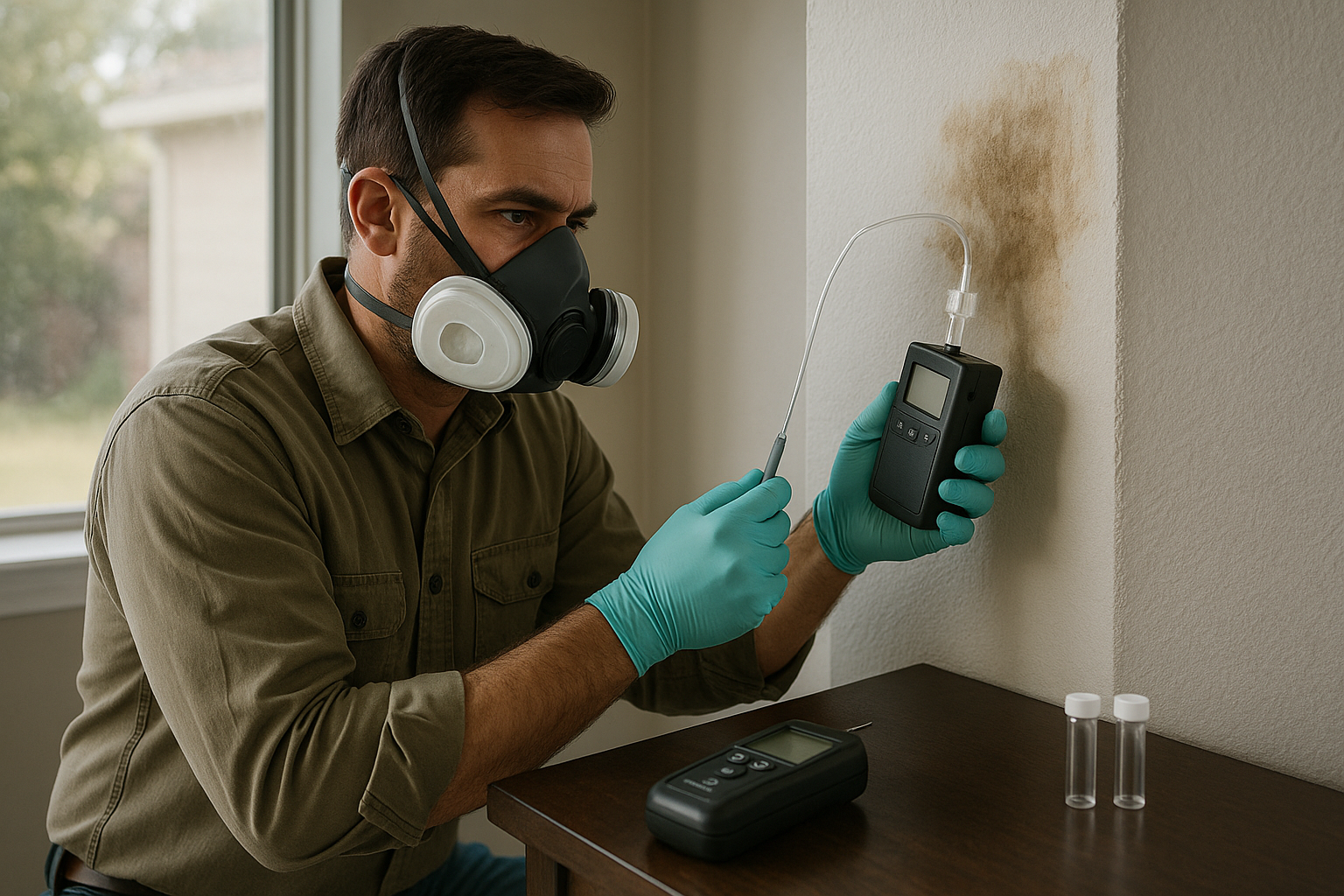
Mold testing in Texas typically costs $200 to $400 for a basic visual inspection, $300 to $700 for sampling with lab analysis, and $400 to $1,000 or more for a comprehensive assessment with air, surface, and moisture testing. The final price depends on home size, number of samples, and whether the inspector is a TDLR-licensed Mold Assessment Consultant. Testing isn't always necessary — if mold is visible, both the EPA and CDC generally recommend skipping straight to remediation.
What determines the price of mold testing in Texas?
Several factors push mold testing costs up or down in Texas:
- Home size and number of sampling locations — more rooms or suspected problem areas mean more samples and higher lab fees.
- Type of sampling — air sampling (which requires a pump and cassette) typically costs more per sample than surface swabs or tape lifts.
- Lab turnaround time — rush results cost extra; standard turnaround is usually cheaper.
- Written remediation protocol — if remediation will follow, Texas law requires a documented scope of work before cleanup can legally begin on qualifying jobs, which adds to the assessment cost but is a legal requirement, not an upsell.
- Travel and market area — pricing varies between major metro areas and rural parts of the state.
Homeowners comparing quotes should ask exactly what's included — a flat inspection fee, per-sample lab costs, and a written report should all be itemized separately.
Why does Texas law require a separate company for testing and remediation?
Texas is one of the few states with a dedicated mold licensing statute. Under Texas Occupations Code Chapter 1958, mold assessment and mold remediation are treated as distinct, licensed activities regulated by the Texas Department of Licensing and Regulation (TDLR). Anyone performing mold assessment or testing for pay generally needs a Mold Assessment Consultant (MAC) or Mold Assessment Technician (MAT) license, while remediation work requires a Mold Remediation Contractor (MRC) or Mold Remediation Worker (MRW) license.
A core conflict-of-interest rule under this chapter is that the company or individual who performs the mold assessment generally cannot also perform the remediation on the same project, with narrow statutory exceptions for very small jobs or certain owner-occupied situations. This rule exists to prevent a company from "finding" mold problems that only it is then paid to fix. For homeowners, it means mold testing and mold remediation are usually priced and billed as two separate services from two separate providers — which is a normal, expected part of the process in Texas, not a red flag.
After remediation is complete, the remediation contractor issues a Certificate of Mold Damage Remediation, which property owners should keep on file — it's often requested during real estate transactions and disclosures.
How can I verify a mold tester's Texas license?
Before paying for an inspection, confirm the company or individual holds an active TDLR mold license. You can search any license number or business name using the TDLR License Search tool. Working with a properly licensed assessor matters because unlicensed "testing" may not meet the documentation standards required for insurance claims, real estate disclosures, or legal disputes. TDLR also publishes consumer guidance, including a 2025 consumer protection PDF and a general mold program FAQ, both useful for understanding your rights before hiring anyone.
If you're ready to find a vetted professional, you can search for a licensed mold contractor near you or browse the full Texas mold remediation directory.
Do I actually need mold testing, or just remediation?
Not always. The EPA's guidance on mold, moisture, and your home states that if mold is visible, testing is typically unnecessary — the recommended action is cleanup and moisture control, regardless of the mold species involved, since there are no established exposure limits for mold spores. The CDC's mold and health guidance similarly notes that visible mold or a persistent musty odor is generally sufficient reason to remediate, without needing lab confirmation first.
Testing is most worth the cost in specific situations:
- Suspected hidden mold behind walls, under flooring, or inside HVAC systems with no visible growth
- Post-flood or post-leak verification after water damage repairs
- Pre-purchase or pre-sale real estate due diligence
- Documentation needed for an insurance claim or legal dispute
- Post-remediation clearance testing to confirm a job was completed successfully
If mold is already visible and there's no insurance or legal documentation need, many homeowners can move directly to hiring a licensed remediation contractor rather than paying separately for testing.
Will homeowners insurance cover mold testing or remediation costs in Texas?
Usually not, unless the mold resulted from a sudden, covered event. Standard Texas homeowners policies generally exclude mold damage caused by long-term leaks, high humidity, or deferred maintenance. Coverage typically applies only when mold results from a "covered peril," such as a sudden pipe burst, and even then many policies apply a specific mold sublimit that caps payout regardless of the overall policy limit. These coverage rules are shaped in part by Texas Insurance Code Chapter 544, and the Texas Department of Insurance's consumer guidance on water damage and mold coverage is a useful resource for understanding what your specific policy will and won't pay for before you request testing or remediation quotes.
Because coverage varies significantly by carrier, endorsement, and the cause of the mold, it's worth calling your insurer before scheduling testing to confirm whether sampling costs, remediation, or both might be reimbursable.
How should I budget for mold testing in Texas?
A reasonable budgeting approach:
- Expect $200–$400 for a basic visual inspection with no lab samples
- Expect $300–$700 for standard air and surface sampling with lab analysis on a typical single-family home
- Expect $400–$1,000+ for a comprehensive multi-sample assessment including moisture mapping and a written remediation protocol
- Budget separately for remediation itself, which is priced independently due to Texas's assessor/remediator separation rule
Always request an itemized quote and confirm the assessor's TDLR license number before paying a deposit.
This article is general information for Texas homeowners, not legal, medical, or insurance advice. Costs, rules, and coverage vary by property and change over time — verify details with a licensed professional and current TDLR guidance before acting.
Authoritative references used across this site: Sources: TDLR mold program · TDLR License Search · Texas Occupations Code Ch. 1958 · EPA mold guide · CDC mold & health
Find a Licensed Mold Contractor in Your Area
Search by city to find TDLR-verified mold remediation contractors near you.
Search Your City →