
Home → Blog → What Is the Mold Remediation Process Step by Step in Texas?
What Is the Mold Remediation Process Step by Step in Texas?
Texas Mold Remediation Team · September 3, 2026
Written for Texas homeowners. Licensing claims should be checked against current TDLR mold rules and the statutes they reference. This is general information, not a substitute for professional advice.
The mold remediation process generally follows seven steps: find and fix the moisture source, assess the extent of contamination, contain the area, remove damaged materials, clean remaining surfaces, dry everything completely, and verify the job worked. In Texas, larger jobs also involve a licensed mold assessor and a licensed mold remediation contractor working as separate parties, with a formal certificate issued when the work is done.
Below is what actually happens on a typical Texas mold job, plus the state-specific rules, costs, and insurance details homeowners need to know before hiring anyone.
What are the core steps in the mold remediation process?
The EPA's guidance on mold, moisture, and your home outlines a standard sequence that Texas remediation contractors follow on both small and large jobs:
- Fix the moisture source first. A leaking pipe, roof, foundation crack, or AC condensation issue has to be repaired, or the mold will return no matter how thoroughly it's removed.
- Assess the extent of contamination. On bigger jobs, a licensed mold assessor inspects the property, may use moisture meters or a borescope to check inside walls, and writes a remediation protocol describing what needs to be removed and how.
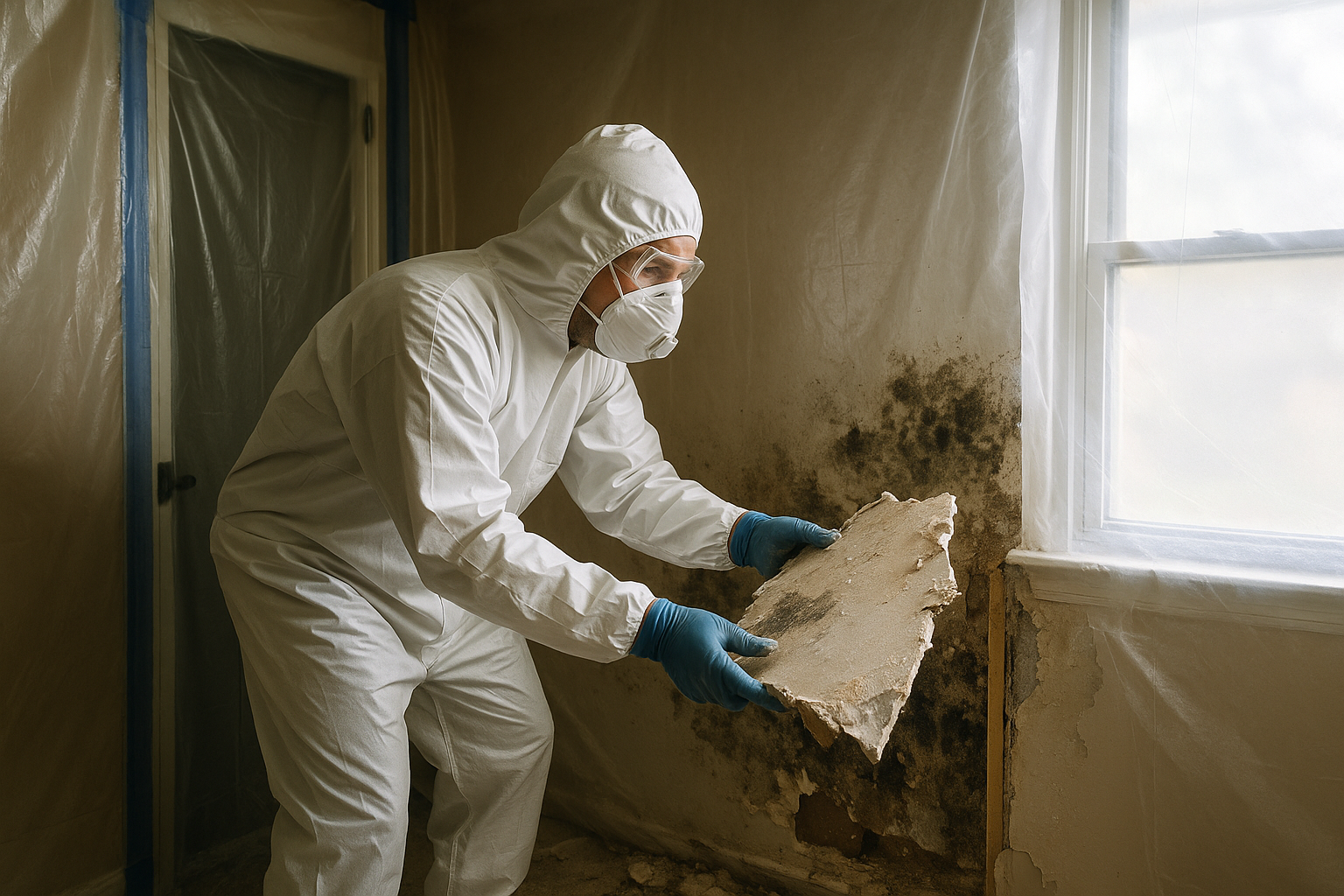
- Contain the affected area. Plastic sheeting and negative-air containment isolate the work zone so spores don't spread to clean parts of the home during demolition.
- Remove and discard porous, contaminated materials. Drywall, insulation, carpet, and other porous materials with visible mold growth are typically bagged and removed rather than cleaned, per CDC mold guidance.
- Clean non-porous surfaces. Studs, concrete, and other hard surfaces are HEPA-vacuumed and cleaned with detergent or an antimicrobial solution.
- Dry the space completely. Air movers and dehumidifiers bring moisture levels down to normal before any rebuild work starts.
- Verify the fix. A final visual inspection, moisture readings, and sometimes post-remediation clearance testing confirm the area is dry and mold-free before the space is closed back up.
Neither the EPA nor CDC requires mold sampling for most residential jobs — a thorough visual inspection combined with moisture readings is usually enough to guide the work.
Who is legally allowed to do mold remediation in Texas?
Texas regulates mold work through the Texas Department of Licensing and Regulation (TDLR) under a dedicated mold licensing program, separate from general contractor licensing. TDLR issues several distinct license types:
- Mold Assessment Consultant
- Mold Assessment Technician
- Mold Remediation Contractor
- Mold Remediation Worker
These rules come from Texas Occupations Code Chapter 1958. A key feature of the Texas system is the independence requirement: the licensed assessor who inspects the property and writes the remediation protocol generally cannot have a financial interest in the remediation company hired to do the removal work, and vice versa. This separation is meant to prevent a company from inflating the scope of work it's also being paid to perform. Homeowners doing DIY work on their own single-family home are generally exempt from needing a mold license themselves, though basic safety practices still apply.
Texas law also carves out a small-job exemption for contiguous mold-affected areas below a defined square footage threshold, which fall outside the full licensing requirements. Because this exact threshold and some exceptions to the independence rule can be updated by TDLR or the legislature, homeowners with a borderline-size job should confirm current thresholds directly on TDLR's mold program page before assuming an exemption applies.
What is a Certificate of Mold Damage Remediation, and do I need one?
For jobs above the exemption threshold, Texas law requires the licensed remediation contractor to issue the property owner a Certificate of Mold Damage Remediation once work is complete. This certificate states that the remediation followed the assessor's written protocol. It matters beyond just paperwork — buyers, lenders, and insurers often ask for this certificate during real estate transactions, and it can be tied to disclosures required under Texas Property Code §5.008, which requires sellers to disclose any known previous mold remediation or current mold issues on the Seller's Disclosure Notice. Keeping this certificate on file protects homeowners at resale time.
How much does mold remediation cost in Texas?
Costs vary widely based on the size and location of the contamination:
- Small, contained jobs (a bathroom, closet, or small area): roughly $500–$1,500.
- Moderate whole-area jobs: roughly $1,500–$7,500, often quoted around $10–$25 per square foot.
- Large-scale jobs (whole-house contamination, HVAC involvement, flood-related structural mold): $10,000–$30,000 or more.
These are general industry estimate ranges rather than state-published figures, so treat them as a planning guide and get an itemized quote for your specific property. You can compare licensed options through the Texas mold remediation directory or use the contractor search tool to find a licensed mold remediation contractor near you.
Will my homeowners insurance cover mold remediation?
In most cases, Texas homeowners policies only cover mold remediation when the mold results from a covered, sudden peril — such as a burst pipe — not from long-term leaks, humidity, poor maintenance, or flooding. Many policies also cap mold-related coverage at a set dollar sublimit unless the homeowner has purchased an added mold endorsement. Flood-caused mold is excluded from standard homeowner policies entirely and would need to be claimed under a separate flood policy. Because sublimits and endorsement terms vary by insurer and policy year, check your specific policy language or contact the Texas Department of Insurance for current consumer guidance before assuming coverage applies.
Do I need to leave my home during mold remediation?
For small, contained jobs, most people can stay in the home while work happens in an isolated area. For larger jobs involving significant demolition or whole-HVAC contamination, temporary relocation is often recommended, especially for anyone with asthma, allergies, a compromised immune system, or for infants and the elderly, who face higher risk from mold exposure per CDC guidance. Anyone doing hands-on cleanup, even on a small DIY job, should use an N95 or higher-rated respirator, non-porous gloves, and eye protection, and should contain the work area with plastic sheeting to limit spore spread to the rest of the home.
Should I hire a professional or handle mold remediation myself?
Texas law allows homeowners to remediate mold in their own single-family home without a license, but DIY is generally only appropriate for small, contained areas of visible mold with an identified and already-fixed moisture source. Larger jobs, mold hidden inside walls or HVAC systems, or situations involving structural water damage typically call for a licensed mold assessor to determine scope and a separate licensed mold remediation contractor to perform the work — partly because of the independence requirement built into Texas law, and partly because improper handling of larger contaminated areas can spread spores throughout the home. If you're unsure which category your situation falls into, a licensed assessor's inspection is a reasonable first call before starting any demolition.
This article is general information for Texas homeowners, not legal, medical, or insurance advice. Costs, rules, and coverage vary by property and change over time — verify details with a licensed professional and current TDLR guidance before acting.
Authoritative references used across this site: Sources: TDLR mold program · TDLR License Search · Texas Occupations Code Ch. 1958 · EPA mold guide · CDC mold & health
Find a Licensed Mold Contractor in Your Area
Search by city to find TDLR-verified mold remediation contractors near you.
Search Your City →