
Home → Blog → What to Do About Mold After a Texas Storm or Flood
What to Do About Mold After a Texas Storm or Flood
Texas Mold Remediation Team · October 23, 2026
Written for Texas homeowners. Licensing claims should be checked against current TDLR mold rules and the statutes they reference. This is general information, not a substitute for professional advice.
If your home flooded or took on water during a Texas storm, start drying everything within 24-48 hours, remove materials that stayed wet beyond that window (carpet, drywall, insulation), and photograph all damage before you discard anything. Mold begins colonizing damp materials in as little as one to two days, so speed matters more than any single cleaning product. For anything beyond a small, isolated area, Texas law generally requires a licensed mold professional to assess and remediate the damage.
This guide walks through the immediate steps, when you legally need a licensed contractor under Texas rules, realistic cost ranges, and how insurance typically handles storm-related mold.
What should I do first after a storm or flood causes mold?
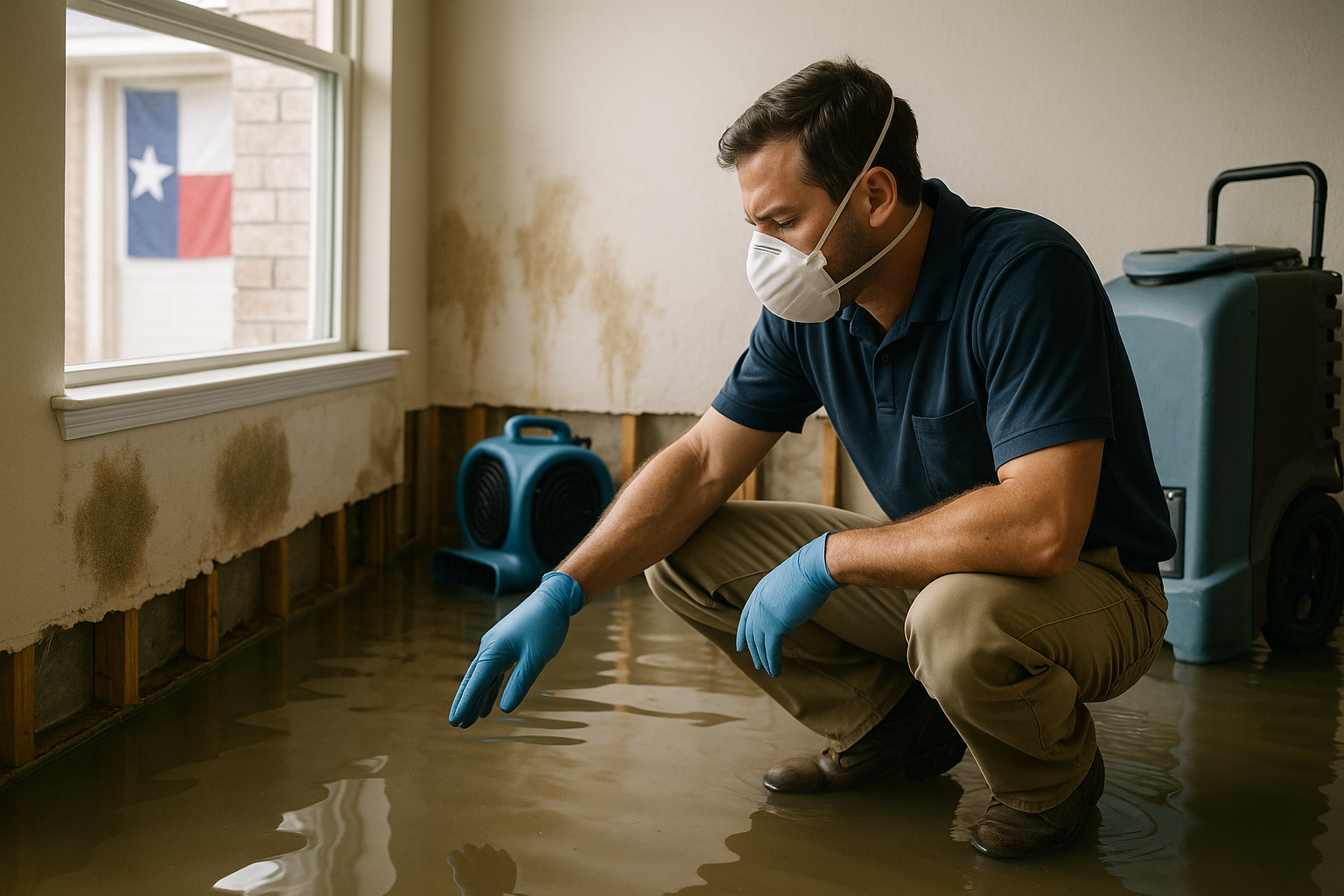
Act on moisture before you worry about visible mold. The EPA's mold guidance is direct on this point: if you can see or smell mold, you don't need to test it first — you need to remove the moisture source and the contaminated material. Priority steps:
- Stop any active water intrusion if it's safe to do so (tarping a roof, shutting off a water source).
- Photograph and video all standing water, wet materials, and damaged contents before cleanup, for insurance documentation.
- Run fans, dehumidifiers, and open windows (weather permitting) to begin drying immediately.
- Remove wet carpet, carpet pad, drywall, and insulation that have been saturated for more than 24-48 hours — these materials typically can't be dried fast enough to prevent mold growth and should be discarded.
- Wear an N95 respirator, gloves, and goggles during any cleanup, per CDC guidance, and keep children, pregnant household members, and anyone with asthma or mold allergies away from the work area.
How fast does mold grow after flooding in Texas?
Mold growth can begin within 24 to 48 hours of a material getting wet, and Texas's heat and humidity make this window even less forgiving than in drier climates. This is why remediation professionals treat the first two days after a storm as the critical period: materials dried out within that window often survive, while anything still wet afterward — especially porous materials like drywall, insulation, and carpet padding — usually needs to be removed rather than treated in place.
Do I need a licensed professional, or can I clean it up myself?
It depends on the size of the affected area and whether you're paying someone to do the work. Texas regulates mold work under the Texas Occupations Code Chapter 1958 and the TDLR Mold Assessment and Remediation program. Under these rules:
- Anyone performing paid mold assessment (inspection, testing, writing a remediation protocol) or paid mold remediation (physical removal) generally must hold a TDLR license — as a Mold Assessment Consultant, Mold Assessment Technician, Mold Remediation Contractor, or Mold Remediation Worker.
- Texas rules include a small-scope exemption for limited, contiguous areas of mold damage that fall below a square-footage threshold; TDLR's current consumer materials spell out the exact figure, so check the TDLR mold FAQ or the TDLR consumer protection guide before assuming a job is exempt.
- Above that threshold, an independent licensed Mold Assessment Consultant typically must write the remediation protocol and perform post-remediation clearance testing — separate from the company doing the physical remediation, to avoid a conflict of interest.
- Homeowners doing DIY cleanup on their own property are generally not subject to these licensing requirements — the rules target paid professionals, not owner-occupants cleaning their own home.
- When a job does require licensing, the remediation contractor must issue a Certificate of Mold Remediation once the work is complete, certifying it followed the approved protocol.
You can verify any contractor's license status directly through TDLR's License Search tool before hiring. For a vetted starting point, you can also search for a licensed mold remediation contractor near you.
How much does mold remediation cost in Texas after a storm?
Costs vary widely based on square footage, how long materials stayed wet, and whether HVAC systems were contaminated. Typical ranges reported across the Texas remediation industry:
- Small, localized remediation (a bathroom, closet, or isolated section of drywall): roughly $500-$1,500.
- Moderate remediation (one or two rooms with moderate drywall/insulation removal): roughly $2,000-$6,000.
- Large-scale or whole-house remediation after significant flooding — extensive drywall and flooring removal, HVAC duct remediation, structural drying — can run $10,000-$30,000 or more.
- Mold assessment and clearance testing is usually billed separately from remediation, often $300-$800 per visit.
Post-storm jobs tend to run higher than routine mold cases because they often combine water extraction, structural drying, remediation, and sometimes asbestos or lead testing in older homes. Get a written scope of work and itemized estimate before authorizing repairs, and browse the Texas mold remediation directory to compare licensed companies in your area.
Will my homeowners insurance cover storm-related mold?
Often only partially, and the details depend heavily on what caused the water intrusion. A few general points, per the Texas Department of Insurance:
- Standard homeowners policies typically do not cover flood damage — including mold that results from flooding — because flood is normally excluded and requires separate NFIP or private flood insurance.
- Mold resulting from a sudden, covered event (like a burst pipe or storm-damaged roof leak) is more likely to have some coverage, though many Texas policies cap mold remediation costs at a sublimit far below the actual cost of large-scale remediation.
- Texas Insurance Code Chapter 544 addresses mold-related insurance provisions, including disclosure requirements insurers must follow regarding mold coverage limitations.
- Document everything before you start removing damaged materials, mitigate further damage where you reasonably can, and file your claim promptly — specific notice deadlines vary by policy, so check your declarations page or call your agent directly.
What if I'm renting and my landlord won't address mold?
Texas Property Code §92.0135 covers a landlord's duty to repair conditions that materially affect a tenant's health or safety, and this provision has been applied to toxic mold conditions stemming from unaddressed moisture problems. If you're renting and your unit flooded or has visible mold, put your repair request in writing, keep a copy, and note the date — Texas law ties specific tenant remedies to proper written notice and the landlord's response time. If the landlord doesn't act, document the condition and consult the statute or a tenant's rights resource for your specific next steps.
How do I find a licensed Texas mold remediation contractor?
Confirm any contractor's license before signing a contract. You can check status directly through TDLR's License Search, and ask for their license number up front — a legitimate Mold Remediation Contractor should provide it without hesitation. To start comparing options, search for a licensed contractor near you or browse the full Texas mold remediation directory.
What health symptoms should I watch for after storm-related mold exposure?
According to the CDC, mold exposure commonly causes nasal and sinus congestion, cough, wheezing, and eye or skin irritation. People with asthma or mold allergies can experience worsened symptoms or asthma attacks, and anyone in those groups — along with infants and people with weakened immune systems — should avoid being present during active mold cleanup or demolition whenever possible.
This article is general information for Texas homeowners, not legal, medical, or insurance advice. Costs, rules, and coverage vary by property and change over time — verify details with a licensed professional and current TDLR guidance before acting.
Authoritative references used across this site: Sources: TDLR mold program · TDLR License Search · Texas Occupations Code Ch. 1958 · EPA mold guide · CDC mold & health
Find a Licensed Mold Contractor in Your Area
Search by city to find TDLR-verified mold remediation contractors near you.
Search Your City →