Home → Blog → How to Test for Mold in Your House
How to Test for Mold in Your House
Texas Mold Remediation Team · August 31, 2026
Written for Texas homeowners. Licensing claims should be checked against current TDLR mold rules and the statutes they reference. This is general information, not a substitute for professional advice.
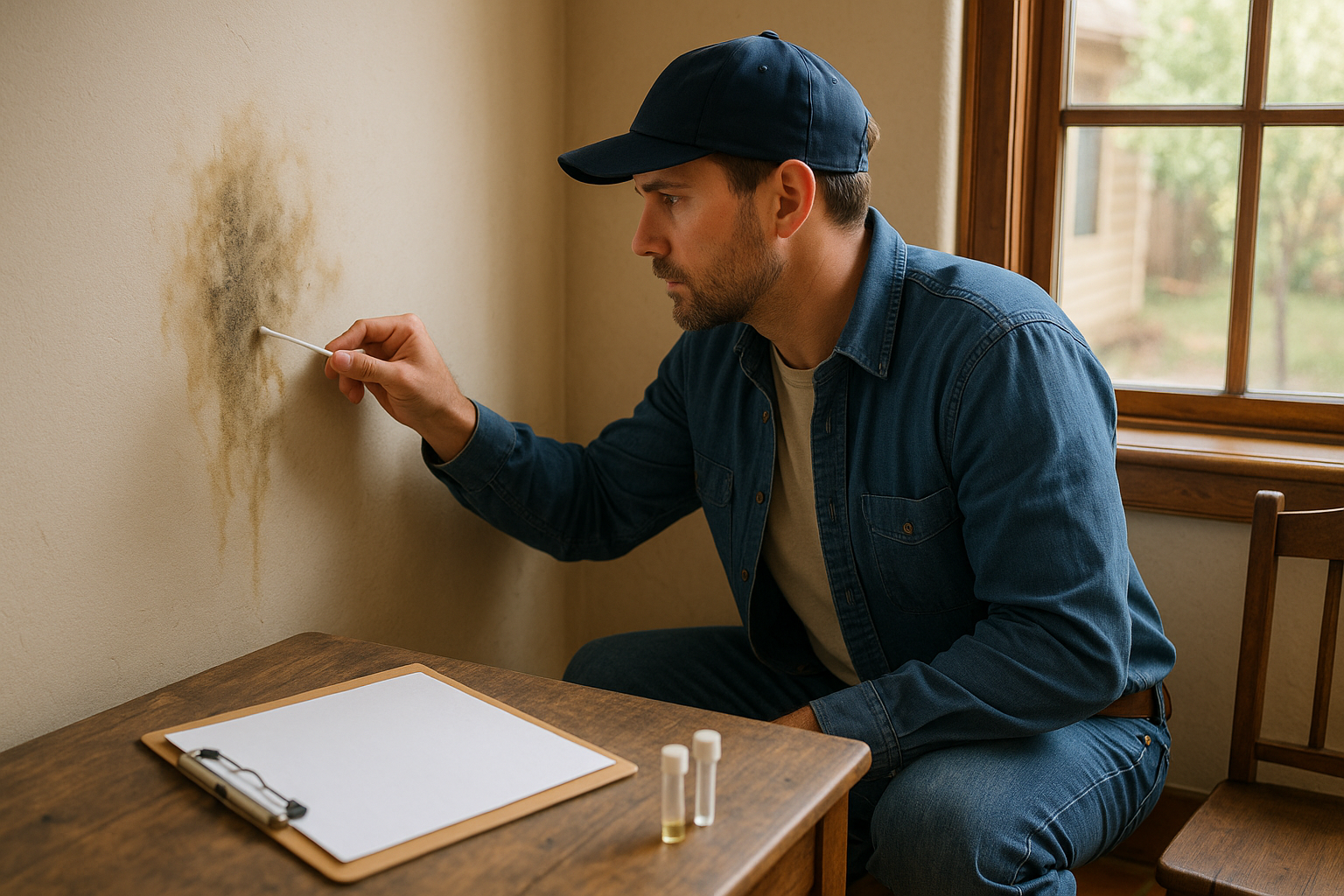
You can test for mold in your house yourself with a DIY sampling kit (swab, tape lift, or petri dish, generally $10–$50) or by hiring a Texas-licensed mold assessment consultant, whose inspections typically run $300–$700 for a home visit with air and surface samples sent to a lab. But before buying a kit or booking an inspector, it's worth knowing what the EPA and CDC actually recommend: if you can already see mold or smell a musty odor, testing usually isn't necessary at all — the priority is finding and fixing the moisture source. Testing is best reserved for specific situations like real estate transactions, unexplained health symptoms, hidden mold behind walls, or verifying that a remediation job actually worked.
Do You Actually Need to Test for Mold?
In most cases, no. The EPA's guide to mold, moisture, and your home states that sampling is generally unnecessary because there are no federal or EPA exposure limits to compare results against — a lab report can tell you mold is present, but it can't tell you whether that level is "safe" or "dangerous," because no such standard exists. The CDC's mold guidance takes the same position: there's no CDC or federal standard for acceptable mold spore counts, and the recommended response — clean up visible mold and correct the moisture problem — is the same no matter which species is identified. If you're mainly trying to figure out "is this toxic black mold or something harmless," both agencies say that question usually doesn't change what you should do next.
How Do DIY Mold Test Kits Work, and Are They Reliable?
Store-bought kits typically use one of three methods: a swab or tape lift applied directly to a suspicious surface, a settle plate (open petri dish left in a room to collect airborne spores), or a small air-sampling pump. Most cost between $10 and $50, and results either grow visible mold colonies at home or get mailed to a lab for identification.
The catch is that mold spores exist in outdoor and indoor air almost everywhere in Texas, so a positive result on a settle-plate test often just confirms what's already true of any home — it doesn't tell you whether there's an active problem worth remediating. DIY kits are most useful for one narrow purpose: confirming whether mold is present behind a wall or under flooring when you can smell a musty odor but can't find visible growth. They're a poor tool for deciding how serious a problem is, for post-remediation clearance testing, or for documenting a health claim, since sampling technique, timing, and lab methodology all affect results.
When Should You Hire a Professional Mold Inspector in Texas?
A licensed inspection makes more sense than a DIY kit when:
- You're buying or selling a home and want documentation of current conditions.
- Someone in the household has ongoing respiratory or allergy symptoms and you want to rule out hidden mold as a factor.
- You suspect mold behind walls, under cabinets, or inside HVAC ductwork but can't visually confirm it.
- You need clearance testing after a remediation job to confirm the work was effective.
- You're documenting damage for an insurance claim or a landlord-tenant dispute.
Anyone performing mold assessment or remediation for hire in Texas is generally required to hold a license from the Texas Department of Licensing and Regulation (TDLR) under the mold assessment and remediation program — categories include Mold Assessment Consultant, Mold Assessment Technician, Mold Remediation Contractor, and Mold Remediation Worker. Texas law does exempt homeowners from needing a license to test or clean up mold in their own home, as long as they're not doing the work commercially for others. But if you hire a company to do it, that company should hold an active TDLR license. You can search for a licensed contractor near you or browse the full Texas mold remediation directory before scheduling an inspection.
What Does Professional Mold Testing Cost in Texas?
Pricing varies by scope and region, with Gulf Coast markets (Houston, Beaumont, Corpus Christi) generally running higher than North and West Texas due to humidity-driven demand. Typical ranges seen across the state:
- Basic visual inspection plus a handful of air/surface samples: roughly $300–$700.
- Comprehensive assessment (multiple rooms, HVAC sampling, full lab analysis): often $600–$1,000 or more.
- DIY test kits: $10–$50, with the reliability limitations noted above.
These figures are testing costs only — actual remediation (removing and treating affected materials) is priced separately and can range from a few hundred dollars for an isolated small area to several thousand dollars for a whole-house job, depending on square footage, materials affected, and whether structural drying or reconstruction is needed.
Is Mold Testing or Remediation Legally Required in Texas?
Texas doesn't require homeowners to test for mold in their own property. What Texas law does regulate is who can be paid to do assessment and remediation work: under Texas Occupations Code Chapter 1958, companies and individuals performing mold work for hire must hold the appropriate TDLR license, with limited exceptions for very small-scale projects. Texas rules have historically drawn a line around small, contained areas of mold that don't require the full licensed-protocol process — check current TDLR rule text for the exact square-footage threshold before relying on it, since rule language can be updated.
Separately, when a licensed contractor performs remediation above a certain cost threshold (commonly cited around $500 in labor and materials), Texas law requires them to issue a Certificate of Mold Damage Remediation to the property owner. That certificate matters later: Texas's promulgated Seller's Disclosure Notice, tied to Property Code §5.008, asks sellers whether they're aware of previous mold remediation on the property. If you've had remediation work done, keep that certificate — it will likely come up during a future home sale.
Does Homeowners Insurance Cover Mold Testing in Texas?
Usually only in limited circumstances. Standard Texas homeowners policies typically cap or sublimit mold-related coverage — a commonly cited figure is around $5,000 — and only when the mold results from a sudden, covered event like a burst pipe. Mold caused by gradual leaks, long-term humidity, or flooding is typically excluded, and flood damage requires separate flood insurance rather than a standard homeowners policy. Coverage details vary by insurer and policy form, so check your specific declarations page and, if needed, consult the Texas Department of Insurance for current consumer guidance on mold coverage before assuming a claim will be paid.
What Should You Do After You Find Mold?
Regardless of testing results, the fix is the same: identify and correct the moisture source first, then address the mold itself. Small, isolated patches of surface mold on hard, non-porous surfaces can often be cleaned by a homeowner using standard cleaning products. Larger areas, mold on porous materials like drywall or carpet, recurring growth, or any mold tied to a known water event (flood, long-term leak, storm damage) generally call for a licensed remediation contractor rather than a DIY approach. If you're unsure whether your situation qualifies as small-scale, a licensed assessor can evaluate the extent before remediation begins — search the Texas mold remediation directory to find a TDLR-licensed professional in your area.
This article is general information for Texas homeowners, not legal, medical, or insurance advice. Costs, rules, and coverage vary by property and change over time — verify details with a licensed professional and current TDLR guidance before acting.
Authoritative references used across this site: Sources: TDLR mold program · TDLR License Search · Texas Occupations Code Ch. 1958 · EPA mold guide · CDC mold & health
Find a Licensed Mold Contractor in Your Area
Search by city to find TDLR-verified mold remediation contractors near you.
Search Your City →