
Home → Blog → Why Is Mold So Common in Houston Homes?
Why Is Mold So Common in Houston Homes?
Texas Mold Remediation Team · July 29, 2026
Written for Texas homeowners. Licensing claims should be checked against current TDLR mold rules and the statutes they reference. This is general information, not a substitute for professional advice.
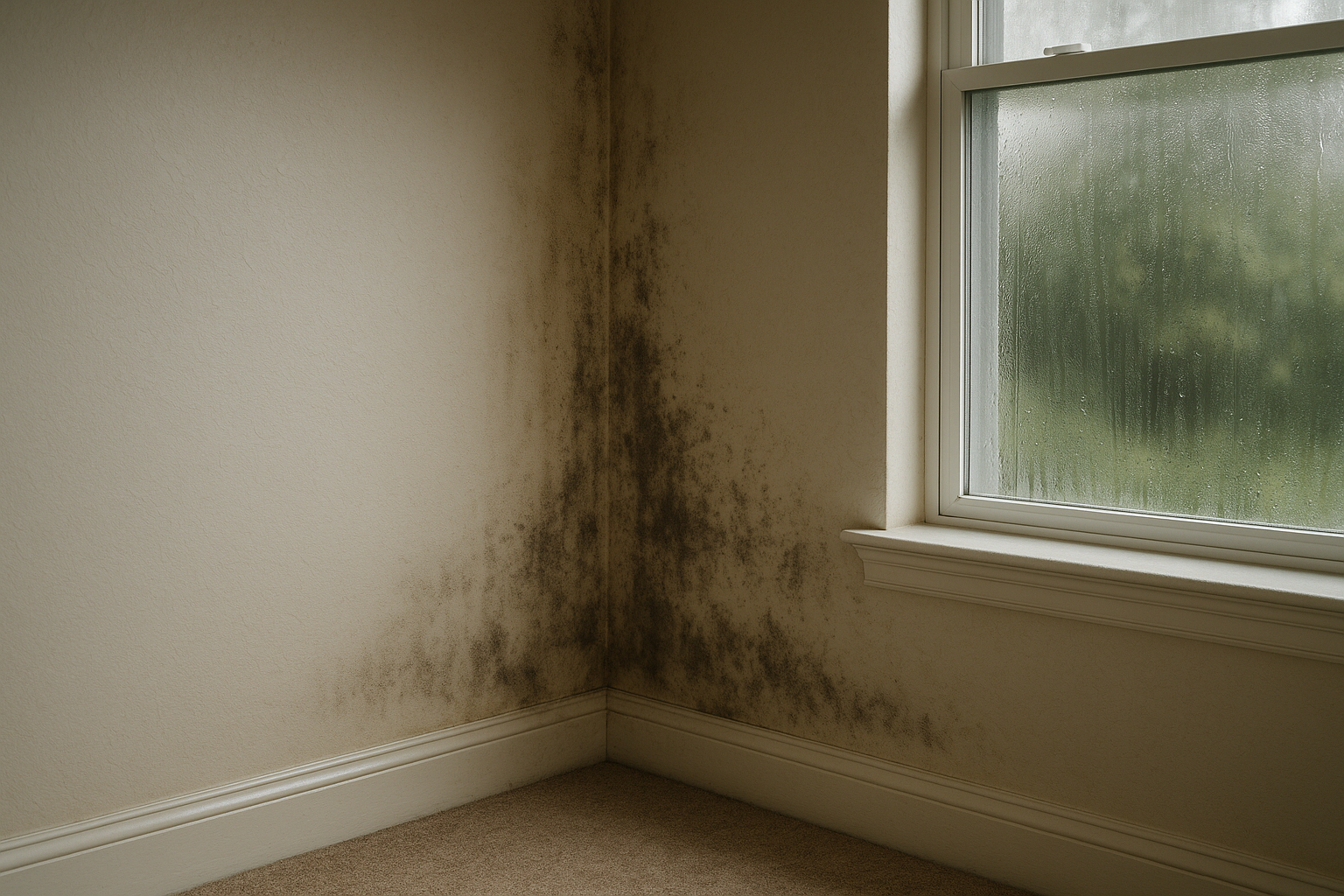
Mold is common in Houston homes because the city's humid subtropical, Gulf Coast climate keeps indoor moisture high nearly year-round, and mold only needs moisture, an organic food source, and time to grow. Heavy rainfall, frequent flooding, high dew points, and constant air-conditioning condensation give mold spores everything they need, often within 24 to 48 hours of a water problem. That combination is why the Houston mold problem is one of the most persistent home-maintenance issues on the Gulf Coast.
What causes mold to grow so easily in Houston?
Mold spores are always present in the air, indoors and outdoors. They become a problem only when they land on a damp surface with something organic to feed on, such as drywall, wood, carpet, or insulation. In Houston, several conditions make that combination almost unavoidable:
- High year-round humidity and dew points. The Gulf Coast climate keeps outdoor air moist for much of the year, which raises indoor humidity whenever doors open or ventilation is poor.
- Air-conditioning condensation. Undersized, oversized, or poorly maintained HVAC systems produce condensation and can leave humidity high inside the home, feeding mold around vents, ducts, and drain pans.
- Storm and flood exposure. Hurricanes and heavy rain (Houston still deals with the legacy of Hurricane Harvey) push water into walls, slabs, and crawl spaces.
- Slab foundations and building materials. Moisture can wick up through slabs, and common materials like gypsum drywall and wood framing are ideal food sources.
According to the EPA's guide to mold, moisture, and your home, the key to controlling mold is controlling moisture. You cannot eliminate mold spores from a home, but you can deny them the water they need.
Is mold worse during certain seasons in Houston?
Yes. The highest-risk window is hurricane and flood season, roughly June through November, when water intrusion after storms drives seasonal spikes in mold growth. Because mold can begin colonizing wet materials within about 24 to 48 hours, the single most effective post-storm step is drying out affected areas quickly, extracting standing water, running dehumidifiers, and removing soaked porous materials before growth takes hold.
Even outside storm season, Houston's summer heat and humidity keep indoor moisture elevated, so AC-related mold can appear any time of year, especially in closets, behind furniture on exterior walls, and near supply vents where warm humid air meets cool surfaces.
Is mold in my home a health risk?
It can be. The CDC's mold and health information notes that damp, moldy environments can cause upper-respiratory symptoms such as nasal congestion, coughing, wheezing, and throat, eye, or skin irritation. People with asthma, allergies, or weakened immune systems may experience more serious or persistent symptoms. If anyone in the home has unexplained respiratory issues that improve when they leave the house, mold and moisture are worth investigating.
One important myth-buster: neither the EPA nor the CDC sets a numeric "safe" indoor mold level, and Texas does not set an indoor-air mold standard either. Any advertisement promising to get you "below a safe threshold" should be viewed skeptically, the goal is to remove the mold and fix the moisture source, not to hit a number.
Does Texas require a license to remediate mold?
Yes, and this is where Texas differs from many states. The Texas Department of Licensing and Regulation (TDLR) administers the Mold Assessors and Remediators program under Texas Occupations Code Chapter 1958 and the rules in 16 Texas Administrative Code Chapter 78.
Key points for Houston homeowners:
- A license is generally required for larger jobs. Texas rules require a TDLR-licensed remediator once the affected area reaches a set contiguous square-footage threshold (commonly cited as 25 square feet), while smaller areas and homeowners working on their own residence are typically exempt. Confirm the current threshold with TDLR before assuming a job is exempt.
- Assessor and remediator are usually separate. To avoid conflicts of interest, the company that assesses or tests for mold generally cannot also perform the remediation on the same project.
- Consumer disclosures are required. Licensed professionals must provide clients with a Consumer Mold Information Sheet.
You can verify a professional's license and find qualified help through the Texas mold remediation directory, or search for a licensed contractor in your area.
What is a Certificate of Mold Damage Remediation?
Under Texas Occupations Code Chapter 1958, a licensed remediator must provide the property owner a Certificate of Mold Damage Remediation after completing a covered job. This document matters beyond the cleanup itself: if you later sell the home, you are required to give a copy to the buyer.
It also has an insurance angle. Texas law limits how insurers can treat prior mold claims when the property was properly remediated and a certificate was issued (or a qualified inspection shows no remaining damage). If you have questions about coverage or claims, the Texas Department of Insurance is the authoritative resource.
Can I clean up Houston mold myself, or do I need a pro?
The EPA suggests that homeowners can generally clean small mold areas, roughly under 10 square feet, themselves, provided they also fix the underlying moisture problem. You should call a professional when:
- The affected area is large or spread across multiple surfaces.
- Mold is in the HVAC system or ductwork.
- The water came from sewage or contaminated flooding.
- You have health concerns or the mold keeps returning.
Remember that even a successful cleanup will fail if the moisture source, a leak, poor drainage, or high indoor humidity, is not corrected first.
How much does mold remediation cost in Houston?
Costs vary widely with the size and location of the problem. Based on current Texas cost guides (treat these as estimates and get written quotes), typical ranges look like this:
- Small, localized jobs: roughly $500 to $1,500.
- Typical whole-job average: roughly $1,100 to $3,500.
- Large, structural, attic/HVAC, or post-flood remediation: $6,000 to $10,000 or more in severe cases.
A separate third-party mold assessment or testing fee, often a few hundred dollars, is common, and because the assessor and remediator are usually required to be different companies, you may pay two invoices for a single project. Always get a written scope of work and confirm the contractor's TDLR license before signing.
What can Houston homeowners do to prevent mold?
- Keep indoor humidity in check with a well-maintained, properly sized AC system and, where needed, dehumidifiers.
- Service HVAC drain pans and change filters regularly.
- Fix roof, plumbing, and window leaks promptly.
- Dry any water intrusion within 24 to 48 hours.
- Improve ventilation in bathrooms, kitchens, and laundry areas.
- After a storm, remove soaked porous materials rather than trying to dry them in place.
Houston's climate means mold prevention is an ongoing task, not a one-time fix. When a problem exceeds what you can safely handle, use a licensed Texas mold remediation contractor to protect both your home and your health.
This article is general information for Texas homeowners, not legal, medical, or insurance advice. Costs, rules, and coverage vary by property and change over time — verify details with a licensed professional and current TDLR guidance before acting.
Authoritative references used across this site: Sources: TDLR mold program · TDLR License Search · Texas Occupations Code Ch. 1958 · EPA mold guide · CDC mold & health
Find a Licensed Mold Contractor in Your Area
Search by city to find TDLR-verified mold remediation contractors near you.
Search Your City →