
Home → Blog → What Are Texas Mold Laws for Landlords? A Legal Rights Guide for Tenants and Property Owners
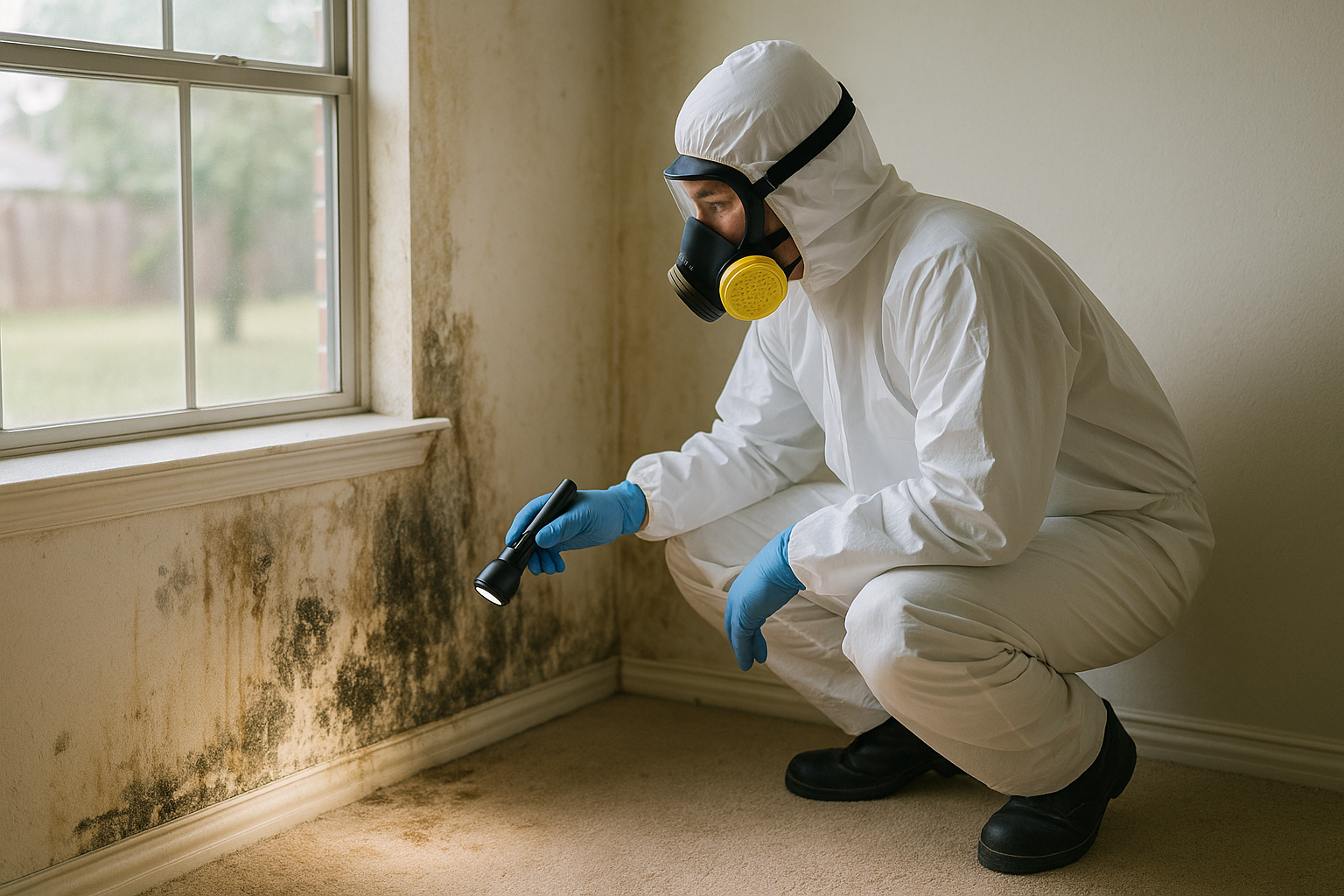
What Are Texas Mold Laws for Landlords? A Legal Rights Guide for Tenants and Property Owners
Texas Mold Remediation Team · August 15, 2026
Written for Texas homeowners and reviewed against current TDLR mold licensing rules.
Texas does not have a mold-specific landlord-tenant statute. Instead, mold problems in rental housing are handled under the general repair-duty law in Texas Property Code Chapter 92, which requires landlords to fix conditions that materially affect a tenant's health or safety once properly notified. Separately, any company hired to test or remove mold above a small threshold must be licensed through the Texas Department of Licensing and Regulation (TDLR) under Occupations Code Chapter 1958. Understanding both layers — tenant rights and contractor licensing — is the key to knowing where you stand.
Does Texas have a law specifically about mold in rental properties?
No. Texas has never passed a standalone "mold law" for landlords or tenants. Mold is treated as one possible cause of a broader "condition" that a landlord has a duty to repair. That duty comes from Property Code §92.052 (Landlord's Duty to Repair), which applies whenever a defect materially affects the physical health or safety of an ordinary tenant — a category that chronic moisture intrusion and resulting mold growth can fall into, but only after the tenant gives proper notice and a reasonable chance to fix it.
This is a common point of confusion: many tenants and landlords assume Texas has mold-specific disclosure or remediation mandates written into the lease code. It doesn't. What Texas does have is a dedicated licensing and technical-standards program for the companies that assess and remove mold, run through TDLR — which is arguably the more distinctly "Texas" part of this topic.
What does a landlord actually have to do if a tenant reports mold?
Under Property Code §92.056, a tenant must give the landlord written notice of the condition. The landlord then has a reasonable time to repair it — commonly treated in practice as around 7 days, though what's "reasonable" can depend on severity and circumstances. If mold is caused by an underlying issue like a leaking pipe, roof leak, or failed HVAC condensation line, the repair duty generally covers fixing that source, not just cosmetic cleanup.
If the landlord doesn't act within a reasonable time after proper notice, tenant remedies under Chapter 92 can include:
- Asking a court to order the repair
- Rent reduction proportional to the reduced value of the unit
- Terminating the lease
- Recovering actual damages, court costs, and attorney's fees
- A civil penalty commonly cited as roughly one month's rent plus $500 in cases of landlord non-compliance
Property Code §92.061 also prohibits a landlord from retaliating against a tenant (e.g., eviction, rent increase, refusal to renew) for reporting a habitability issue like mold or exercising repair-and-deduct rights.
Who is legally allowed to test or remove mold in Texas?
Once a mold job exceeds a small size, Texas requires the work to be performed by state-licensed professionals under the TDLR Mold Assessment and Remediation program, authorized by Texas Occupations Code Chapter 1958 and detailed in 16 TAC Chapter 78. License categories include Mold Assessment Consultants, Mold Assessment Technicians, Mold Remediation Contractors, Mold Remediation Workers, and Mold Analysis Laboratories.
Two structural rules matter most for landlords:
- Independence requirement: In most cases, the same company cannot both test/assess a mold problem and perform the remediation on that same job — this is meant to prevent a conflict of interest where a company has a financial incentive to "find" more mold than actually exists.
- De minimis exemption: Very small, contained mold jobs (a threshold commonly cited around 25 contiguous square feet) fall below the point where licensed professionals are legally required. Because this figure is set by rule and can be updated, confirm the current exact threshold directly on TDLR's mold program page before relying on it for a specific job.
An owner doing remediation on their own primary residence is typically exempt from the licensing requirement — but that exemption does not extend to a landlord doing the work themselves on a rental property they don't occupy. For larger or ambiguous jobs, landlords are better off using a properly licensed contractor. You can start by searching a licensed mold remediation contractor near you or browsing the full Texas mold remediation directory.
What is a Certificate of Mold Damage Remediation, and does a landlord need one?
For jobs that exceed the licensing threshold, the remediation contractor is required to issue a Certificate of Mold Damage Remediation (COMDR) once the work passes post-remediation clearance testing. Landlords should keep this document on file — it can matter later if the property is sold (Texas's Seller's Disclosure Notice under Property Code §5.008 typically asks about known prior water damage or mold), and it can serve as evidence that a reported problem was properly resolved if a tenant dispute arises. Retention-period specifics can shift with rule updates, so check current requirements on the TDLR site rather than assuming an old timeframe still applies.
How much does mold remediation typically cost in Texas?
Costs vary widely based on the size of the affected area, the cause, and whether structural materials need to be removed:
- Small, localized jobs: roughly $500–$1,500
- Average whole-job remediation: commonly $1,000–$6,000, often priced around $10–$25 per square foot
- Large-scale remediation (e.g., after flooding or a major leak): can run $10,000–$30,000 or more
- A standalone mold inspection or testing visit: typically $200–$700, separate from the remediation cost itself
These are general ranges, and construction and labor costs shift year to year, so treat them as planning estimates rather than a quote. Getting a written estimate from a licensed contractor is the only reliable way to know actual cost for a specific unit.
Does homeowners or landlord insurance cover mold damage?
Generally, no — not automatically. Standard Texas homeowners and landlord policies typically exclude mold damage unless it results from a sudden, accidental covered peril, such as a burst pipe. Mold caused by long-term humidity, slow leaks, or deferred maintenance is usually not covered. Even when mold is technically covered, many policies apply a capped sub-limit for mold-related cleanup rather than paying full remediation costs. Texas's mold licensing framework itself traces back to a well-known early-2000s wave of homeowners' insurance mold claims disputes that prompted insurers to tighten exclusions and led to the creation of the state licensing program. Landlords should review policy mold sub-limits directly with their carrier or consult the Texas Department of Insurance for consumer guidance.
How much mold is actually dangerous, according to health authorities?
There is no EPA or federal numeric standard defining an "acceptable" level of indoor mold or mold spores — EPA guidance instead focuses on identifying and fixing the moisture source and cleaning or removing affected materials. As a rough practical benchmark, the EPA notes that mold-affected areas smaller than about 10 square feet can often be cleaned by an occupant using detergent and water, while larger areas generally warrant professional remediation. The CDC notes that mold exposure is mainly linked to nasal and respiratory irritation and can worsen asthma or allergy symptoms in sensitive individuals, and recommends that any visible indoor mold growth be addressed regardless of which species is present.
What should a Texas tenant or landlord do first if mold is found?
Tenants should document the problem in writing (photos plus a dated letter or email) and deliver it to the landlord to start the formal notice clock under §92.056. Landlords should treat any mold report tied to a moisture source as a health-and-safety repair issue, not just a cosmetic complaint, and bring in a licensed assessor or remediation contractor once the affected area is more than minor. Because Texas requires licensing for anything beyond a small, contained job, and because independence rules govern who can test versus who can remediate, it's worth confirming credentials before hiring anyone. A good starting point is to search for a licensed mold contractor or review the statewide mold remediation directory to compare licensed providers in your area.
This article is general information for Texas homeowners, not legal, medical, or insurance advice. Costs, rules, and coverage vary by property and change over time — verify details with a licensed professional and current TDLR guidance before acting.
Find a Licensed Mold Contractor in Your Area
Search by city to find TDLR-verified mold remediation contractors near you.
Search Your City →