
Home → Blog → What to Look for in a Texas Mold Remediation Contractor
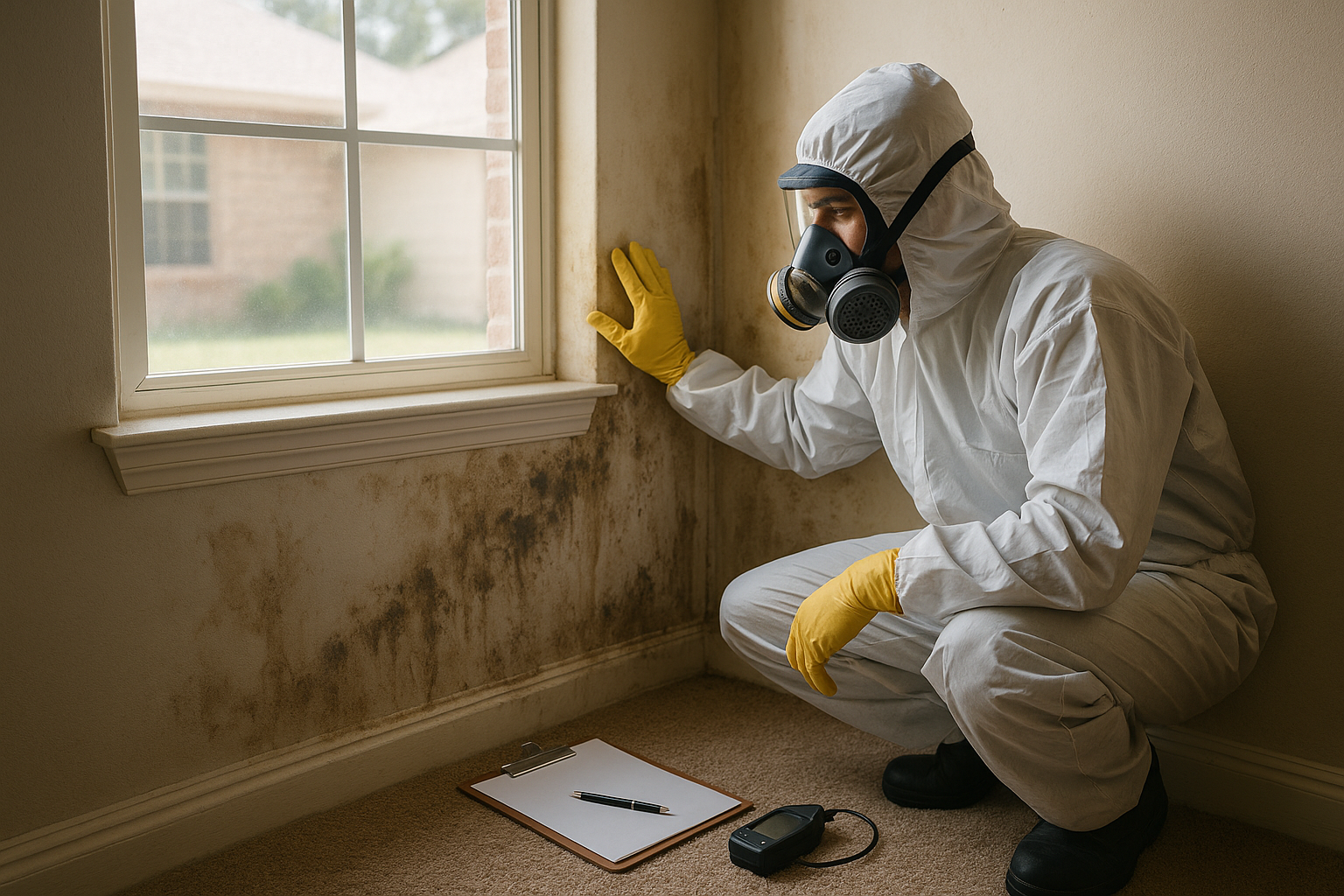
What to Look for in a Texas Mold Remediation Contractor
Texas Mold Remediation Team · August 17, 2026
Written for Texas homeowners and reviewed against current TDLR mold licensing rules.
A qualified Texas mold remediation contractor should hold an active TDLR (Texas Department of Licensing and Regulation) license, provide a written scope of work with a fixed or itemized price, and issue a signed certificate confirming the job met state clearance criteria when the job requires one. If a company can't produce a license number you can verify, or if the same firm wants to both "find" the mold and sell you the cleanup on a larger job, treat that as a red flag. The sections below walk through exactly what to check before you sign a contract.
Is the contractor licensed by TDLR?
Texas mold assessment and remediation work is regulated under Texas Occupations Code Chapter 1958 and enforced by TDLR. There are four separate license types you may encounter:
- Mold Assessment Consultant — inspects and writes the remediation protocol
- Mold Assessment Technician — assists with sampling and inspection
- Mold Remediation Contractor — manages and performs the cleanup
- Mold Remediation Worker — performs remediation labor under a contractor
Ask for the individual's license number, not just the company name, and confirm it's active using TDLR's public license search before any work begins. A business that's evasive about license numbers is a reason to move on to another quote.
Should the same company test for mold and then remediate it?
This is one of the most Texas-specific things to check. State rules generally require a separation of duties between the company that performs the mold assessment (testing and writing the remediation protocol) and the company that performs the actual remediation on larger jobs. The intent is to prevent a conflict of interest where an inspector has a financial incentive to "find" a mold problem that justifies expensive cleanup work. Ask any assessor up front whether their company, or an affiliated company, will also be doing the remediation — and ask any remediation contractor who performed (or will perform) the pre- and post-work assessment. Job size and dollar thresholds for this rule can change, so confirm current requirements directly with TDLR before assuming an exemption applies to a smaller project.
Will they give you a signed certificate of mold remediation?
For jobs that meet the state's threshold, Texas rules require the remediation contractor to issue a signed certificate stating the work was performed according to the applicable rules and that post-remediation clearance criteria were met. Keep this document — it can matter for future home sales, insurance claims, or disputes. If a contractor balks at providing one, or says it's optional when the job clearly isn't a minor, small-area fix, ask why in writing before proceeding.
What should a mold remediation quote in Texas include?
A trustworthy quote should be itemized, not a vague lump sum. Look for:
- A written scope describing exactly what surfaces/materials will be removed, cleaned, or treated
- Containment and air-filtration methods for the affected area
- Whether post-remediation clearance testing is included or billed separately (often performed by an independent assessor)
- Start and completion timeline
- Whether the certificate of mold damage remediation is included
Get two to three quotes for anything beyond a small, isolated spot. Prices and scopes for the same job can vary significantly between contractors, and a lowball bid that skips containment or clearance testing usually isn't actually cheaper once you factor in redo costs.
How much does mold remediation cost in Texas?
Costs vary by the size and location of the affected area, the materials involved (drywall, insulation, HVAC ductwork), and whether the cause has been fixed. As general market ranges commonly cited by remediation professionals:
- Small, isolated areas (a bathroom corner, small closet): often a few hundred to roughly $1,500
- Whole-room or moderate infestations: roughly $1,500–$6,000
- Severe, whole-house, attic-wide, or flood-related infestations: $10,000–$30,000 or more
These are broad ranges, not quotes — always get a site-specific written estimate. Budget separately for an independent assessment and clearance testing, which is not always bundled into a remediation contractor's price. Gulf Coast humidity and periodic hurricane/flood events tend to push demand — and sometimes prices — higher in Houston, Beaumont, and other coastal areas, especially in the weeks after a major storm.
Does homeowners insurance cover mold remediation in Texas?
Standard Texas homeowners policies generally provide limited mold coverage, typically only when the mold results from a sudden, accidental covered peril such as a burst pipe, and usually subject to a sublimit well below the cost of a major remediation job. Mold caused by long-term neglect, humidity, or slow leaks is often excluded. Mold resulting from flooding is generally excluded from standard homeowners policies entirely, since flood damage requires separate flood insurance. Check your policy's mold sublimit and ask your agent whether an endorsement for additional mold coverage is available; the Texas Department of Insurance publishes consumer guidance on this coverage gap.
What health and safety guidance should a contractor follow?
There's no federal or Texas numeric health-based standard for "safe" mold levels, so be skeptical of any contractor who cites a specific air-sample number as proof you're in danger or that the job is complete — neither the EPA nor the CDC endorses mold-count thresholds as definitive health standards. What both agencies agree on is that the real fix is stopping the underlying moisture source, not just removing visible mold, since mold will return if water intrusion isn't corrected. The EPA's mold guidance is widely used as the technical basis for remediation protocols, and the CDC's mold and health guidance explains why moisture control matters for people with allergies, asthma, or other respiratory sensitivities.
How do I spot storm-chaser or unlicensed contractors after a flood?
Mold complaints and remediation demand spike across Texas after major storms and floods, particularly during hurricane season (roughly June through November). This period also draws out-of-state or unlicensed "storm chaser" crews offering fast, cash-only cleanup. Before hiring anyone in the aftermath of a flood:
- Verify the TDLR license number, don't take a business card at face value
- Get a written contract and itemized scope, even under time pressure
- Be wary of high-pressure sales tactics or demands for full payment up front
- Watch for pricing that spikes sharply compared to pre-storm quotes, which may raise price-gouging concerns
What if I have a complaint against a Texas mold contractor?
If you believe a licensed mold assessor or remediation contractor violated Texas rules — for example, by skipping the assessment/remediation separation, failing to provide a required certificate, or performing substandard work — you can file a complaint with TDLR. Keep your contract, invoices, photos, and any certificates as documentation, since these will support a complaint or a dispute with your insurer.
How do I find a licensed mold contractor near me in Texas?
Start by confirming license status directly with TDLR, then compare at least two or three written quotes from contractors serving your specific city or county. You can search for a licensed mold remediation contractor near you or browse the full Texas mold remediation directory to compare local options by city and county before you request quotes.
This article is general information for Texas homeowners, not legal, medical, or insurance advice. Costs, rules, and coverage vary by property and change over time — verify details with a licensed professional and current TDLR guidance before acting.
Find a Licensed Mold Contractor in Your Area
Search by city to find TDLR-verified mold remediation contractors near you.
Search Your City →